
Add us as your preferred source on Google to see more of our content in Search.
 Add to Preferred Sources
The Syrian crisis is one of the world’s biggest and most complex humanitarian emergencies. 8 years of conflict have taken a huge toll on a health system that was once among the best in the region.
Here are 8 things to know about how WHO works in Syria to save lives and support health despite immense challenges.
1. Detecting and responding to disease outbreaks
Dangerously low vaccination rates in some areas, combined with a breakdown of water and sanitation systems and pockets of malnutrition, are making disease outbreaks in Syria more frequent and deadly.
Detecting outbreaks early and responding quickly saves lives. WHO supports over 1 700 health care facilities that report to disease early warning system. Last year, outbreaks of measles, hepatitis A and typhoid fever were rapidly detected and curtailed.
2. Delivering medical supplies despite insecurity, damaged roads, bureaucratic obstacles, and import restrictions
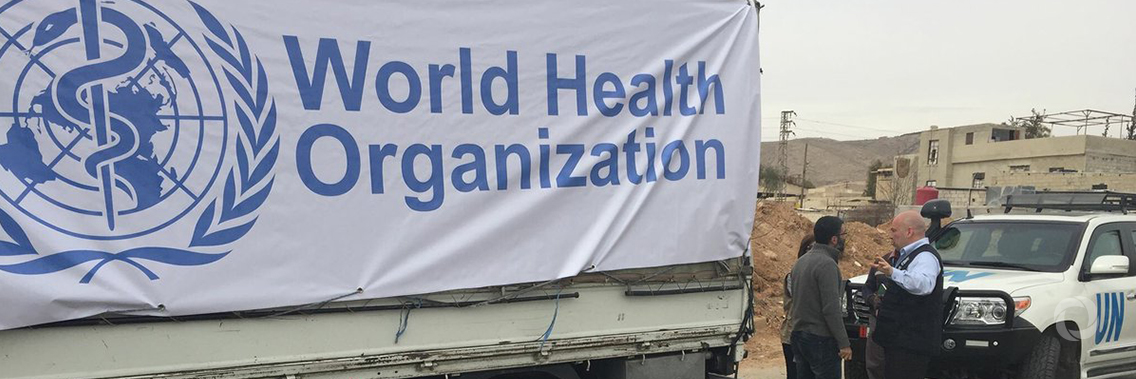
WHO works inside Syria and across its borders to deliver life-saving assistance to millions of Syrians. In 2014, the United Nations Security Council authorized the delivery of humanitarian aid to Syria from neighboring countries. As a result, WHO is able to provide life-saving support in the conflict-torn north-west via operations managed by its hub in Gaziantep, Turkey.
In 2018 WHO delivered over 1900 tonnes of health supplies and equipment across Syria. The medicines included in these deliveries were enough for more than 10 million treatments, including 4.2 million shipped cross-border.
3. Using mobile teams to reach vulnerable populations
One way that WHO reaches vulnerable populations is by bringing health care to them via mobile clinics. These specially modified trucks are equipped with separate rooms for examinations and medical procedures and are usually staffed by a doctor, nurses, and pharmacy assistants. They are a lifeline in areas that are remote or where public health facilities have been destroyed.
In 2018 WHO donated 8 mobile clinics to underserved areas. WHO also dispatched 36 ambulances and 75 mobile medical teams to camps and other priority areas. In addition, WHO’s hub in Gaziantep supports 16 mobile teams to reach rural areas, including 4 teams dedicated to mental health. Mobile teams can go where they are needed and respond quickly to changing conditions.
4. Restoring local health care
13.2 million people need health assistance in Syria, but millions lack access to it. Due to attacks or staff shortages, only about half of Syria’s public health facilities are fully functional. With over 80% of the population living below the poverty line, many people who need health care simply can’t afford the cost of transportation to reach properly equipped or specialized health care facilities.
In 2018 WHO rehabilitated 3 primary health care centres in Aleppo and rural Damascus, and a tuberculosis Centre in Aleppo. WHO also helped 9 hospitals in north-west Syria to resume services.
5. Training health workers
Mass population displacements have contributed to a huge reduction of qualified medical personnel in Syria. For example, Idleb and Aleppo have only 26% of the recommended number of health care workers per 10 000 people required to meet the Sustainable Development Goals. Specialized services such as internal medicine, cardiology and care for chronic diseases are especially affected. In 2018, WHO trained 30 865 people on a wide range of health issues to help address these gaps.
6. Making mental health services more widely available
WHO estimates that, as a result of prolonged exposure to violence, one in 30 people in Syria, is suffering from a severe mental health condition and at least one in 5 is suffering from a mild to a moderate mental health condition.
WHO is training health care providers, delivering psychotropic medicines, providing salaries and running costs for mobile teams and one specialized hospital.
Across the country WHO is supporting the integration of mental health services into primary health care and community centres. More than 520 health facilities in Syria are now providing mental health and psychosocial support services.
7. Supporting Syrians with disabilities
As the conflict drags on, the number of people with injuries and disabilities continues to grow. In some parts of the country, rates of disability have reportedly risen to up to 30% of the population – double the global average.
WHO is procuring and distributing supplies to produce artificial limbs, and is working to restore damaged physical rehabilitation centres.
8. Increasing health coordination and efficiency
WHO leads the humanitarian Health Cluster in Syria, coordinating hundreds of international and national partners to deliver health assistance. This leadership role helps increase the coordination, efficiency, and overall impact of the health sector.
Original source: WHO
Published on 14 March 2019