
Add us as your preferred source on Google to see more of our content in Search.
 Add to Preferred Sources
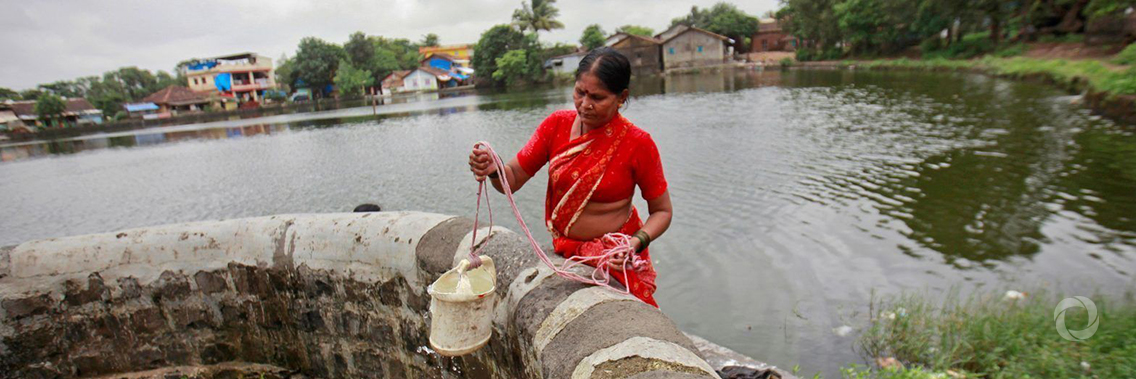
India is among the world’s most water-stressed countries. In 1950, India had 3,000–4,000 cubic meters of water per person. Today, this has fallen to around 1,000 cubic meters, largely due to population growth.
India’s water resources are not evenly distributed. Half of India’s annual precipitation falls in just 15 rain-soaked days, making floods and droughts a fact of life in the country.
On World Water Day, here’s a look at six broad areas where the World Bank is supporting India’s efforts to better manage its water resources.
1. Providing drinking water to rural areas
Since 2000, some $3.4 billion in World Bank support has helped 36 million people in 40,000 villages gain better access to drinking water. Strong community involvement has lowered the cost of infrastructure, curbed the leakage of funds, and led to huge savings for the state exchequer.
2. Groundwater
A new World Bank-supported project will soon introduce water conservation practices and help equip communities 78 districts in seven Indian states to manage groundwater.
3. Improving access to water on dry rainfed lands
In many poor rainfed parts of the country, a series of World Bank-supported watershed projects have used remote sensing images, soil profiles, and hydrological information to help communities build check dams, farm ponds, and other water retention structures to make water available for many more months a year.
4. Cleaning the Ganga
The World Bank’s National Ganga River Basin Project is helping build sewer networks and sewage treatment plants in several of the towns and cities along the river.
5. Managing floods and droughts
Knowing how much water India has, where it has it, and when it has it, is essential for the country to manage its water resources effectively.
Since 1995, a series of World Bank-supported hydrology projects – Hydrology I (1995-2003); Hydrology II (2004-2014) – have introduced systems and technology that enable reservoir managers to take crucial decisions so that their reservoirs remain full, dams remain safe, and no damage is caused downstream.
6. Enhancing dam safety in India
A World Bank-supported project is helping rehabilitate and modernize over 220 large dams in Kerala, Madhya Pradesh, Orissa, and Tamil Nadu. It is also helping reform institutions and strengthening regulations to make these dams both safe and financially sustainable.
Original source: World Bank
Published on 22 March 2019