
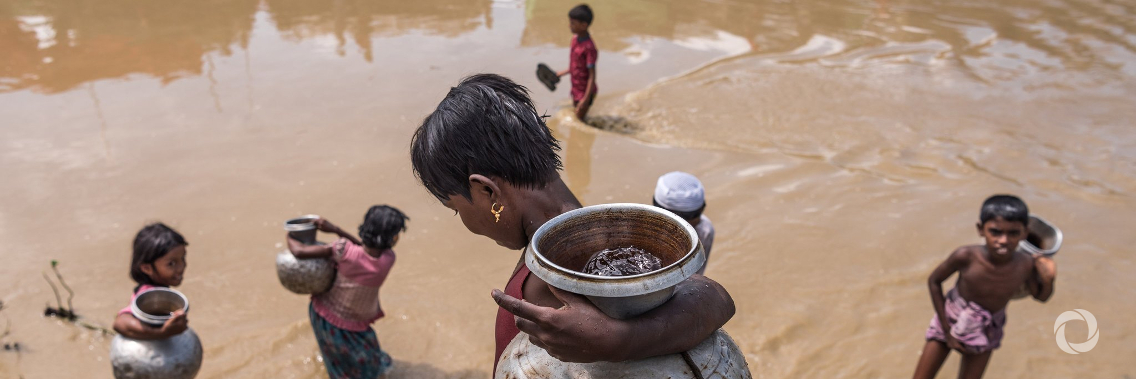
UNHCR and its partners are using solar power to help provide safe, clean water to thousands of Rohingya refugees in Bangladesh
Add us as your preferred source on Google to see more of our content in Search.
 Add to Preferred Sources
Three out of 10 people worldwide do not have access to potable water – according to the UN World Water Development Report 2019, Leaving no one behind – despite safe drinking water and sanitation being recognized as basic human rights, indispensable to health and human dignity.
The solar-powered water system is one of eight new networks jointly completed by UNHCR, the UN Refugee Agency, OXFAM, Médecins Sans Frontières and Bangladeshi non-governmental agency BRAC, which have been installed in the last half year, supplying a total of 40,000 people across the site. There are plans to install another 10 networks in the coming year, which will benefit 80,000 more refugees.
The systems run entirely on electricity generated through solar panels. Motorized pumps draw water from deep boreholes to newly-installed 70,000-litre tanks where chlorine kills bacteria and other harmful microbes. It is then piped to collective water points strategically installed throughout the Kutupalong-Balukhali site.
More than 900,000 Rohingya refugees are living across 34 different locations in Cox’s Bazar, Bangladesh.
Efforts to provide enough safe drinking water for refugees across all the heavily congested sites has presented a massive challenge for humanitarian agencies, requiring the drilling of deep tube wells, building water networks including the installation of pipes, dams, canals, filtering mechanisms and chlorination systems.
Additionally, UNHCR and Oxfam earlier this year put into service the biggest human waste treatment facility ever built in a refugee settlement. The plant is able to process the waste of 150,000 people.
In most locations, water is scarce. In the dry season, especially in areas like Nayapara, often the only solution is water trucking, which is very costly. It has been challenging to secure adequate water sources for the whole refugee population. In response, UNHCR and partners, working closely with the Government of Bangladesh, have stepped up their efforts in the past year to look at lasting solutions for water and sanitation.
“The new solar-powered water networks reduce energy costs and fuel emissions,” says Murray Wilson, head of UNHCR’s water, sanitation and hygiene (WASH) programmes in Cox’s Bazar.
UNHCR and its partners aim to provide 20 litres of chlorinated water per day to every individual refugee – ensuring safe water for all
Original source: UNHCR
Published on 21 March 2019