
Add us as your preferred source on Google to see more of our content in Search.
 Add to Preferred Sources
Burundi, Chad, and Sudan are home to some of the world’s largest displaced populations and vulnerable communities.
Burundi’s Gitega Province, which has one of the country’s highest population densities, hosts several thousand of people in refugee settlements and camps. About 96 percent of families use fuelwood as a primary energy source for cooking.
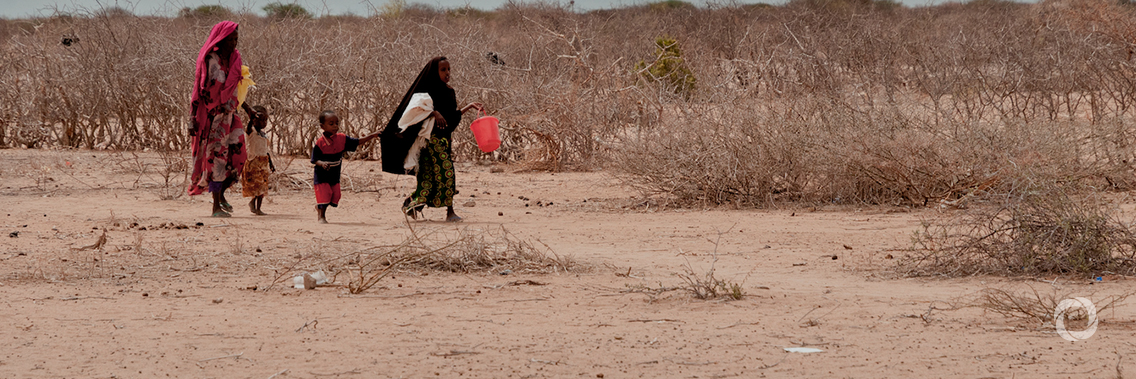
In Sudan, lack of infrastructure, conflict, displacement, climate change, and environmental degradation have complicated people’s access to energy and water, thus affecting their food security. Hotter climate and erratic rainfall are progressively making Sudan unsuitable for agriculture, with potentially massive humanitarian implications.
Similarly, large populations of South Sudanese refugees have settled in Sudan’s Darfur, Nile and Kordofan states, placing immense pressure on already fragile lands. These states, with limited natural resources such as forests and pasture areas, are drought-prone with high rates of desertification.
Sudan’s western neighbor Chad faces similar challenges. The security situation in neighboring countries has precipitated large population movements into Chad as well as an internal displacement for several years, exposing already vulnerable populations to recurrent humanitarian crises which affected their resilience.
The effects of climate change are expected to impact many regions across Africa, such as Gitega, Darfur or the Lake Chad basin, not only because of changing rainfall patterns and increased desertification but also due to increased risks of flooding.
The Intergovernmental Panel on Climate Change’s Special Report on the Global Warming of 1.5 ºC clearly outlines what the humanitarian impacts of climate change could be. Sub-Saharan Africa, in particular, has been identified as a climate change hotspot. The region is expected to experience an increase in the frequency and intensity of droughts, with significant consequences on agricultural production, food security and tensions linked to access to water. This will only further exacerbate ongoing humanitarian situations.
Cognisant of these challenges, the World Food Programme, UN Environment, Unicef, the UN Refugee Agency and the World Wind Energy Association, have joined hands, with financial support from the International Climate Initiative, to support the Governments of Burundi, Chad and Sudan in strengthening climate change adaptation in target humanitarian hotspots.
The initiative—a mechanism of Germany’s Federal Ministry for the Environment, Nature Conservation and Nuclear Safety (BMU)—has financed climate and biodiversity projects in developing and newly industrializing countries, as well as in countries in transition.
The project, launched in September 2018, will run until August 2020. “The joint project aims to strengthen the capacity for climate adaptation of displaced populations and vulnerable communities in Burundi, Sudan and Chad. Country-specific reviews in all three countries will assess climate risks and vulnerability to inform humanitarian operations,” says Margherita Fanchiotti, of the UN Environment/OCHA Joint Unit.
Since its establishment in 1994, the UN Environment/OCHA Joint Unit has mobilized experts and equipment in response to environmental emergencies worldwide, backed by a strong international network of partners. The joint unit, a partnership between UN Environment and the UN Office for the Coordination of Humanitarian Affairs (OCHA), has continuously worked to improve the response to environmental impacts of sudden-onset disasters and complex emergencies.
Original source: UN Environment
Published on 28 March 2019