
Add us as your preferred source on Google to see more of our content in Search.
 Add to Preferred Sources
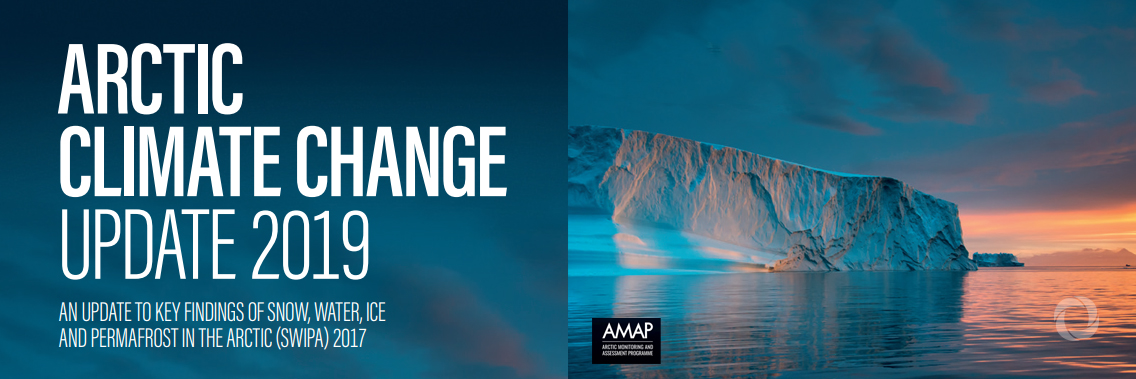
New observations confirm continued rapid warming in the Arctic, driving many of the changes underway in the region, including loss of sea ice and glacier coverage, as well as changes in terrestrial and marine ecosystems. This affects Arctic communities and economies, according to a new Climate Change Update from the Arctic Monitoring and Assessment Programme (AMAP).
Arctic Ocean acidification is an emerging threat – with models predicting the possible collapse of some important Arctic commercial and subsistence fisheries, according to an Arctic Ocean Acidification Assessment. The Arctic and subarctic regions are home to important and valuable fisheries. They yield a tenth of the global commercial catch, and subsistence fisheries provide vital nutritional and cultural services to Arctic residents.
A separate report looked at the biological effects of contaminants on Arctic wildlife and fish. Contaminants that are transported to the Arctic by winds and ocean currents, including some that are now globally banned, continue to pose threats to the health of Arctic wildlife and ecosystems, raising concerns for the viability of some Arctic animal populations, it says.
The AMAP climate change update confirmed that Arctic warming continues unabated.
Observed and projected annual average warming in the Arctic continues to be more than twice the global mean, with higher increases in winter.
Arctic annual surface air temperatures in the past five years exceeded those of any year since 1900. Arctic winter sea ice maximums in 2015, 2016, 2017, and 2018 were at record low levels, and the volume of Arctic sea ice present in the month of September has declined by 75 percent since 1979.
Warming temperatures and extreme events are affecting the Arctic terrestrial landscape through the expansion of shrubs into tundra, increased vulnerability to insect disturbances, regional declines in tundra vegetation, and increases in severe fire years. Marine environments are also affected: for example the loss of sea ice has triggered shifts in marine algal blooms, with potential impacts throughout the food web including krill, fish, birds, and mammals in marine ecosystems.
Arctic glaciers, led by the Greenland Ice Sheet, are the largest land-ice contributors to global sea level rise. Even if the Paris Agreement is successful, they will continue to lose mass over the course of this century.
Read and download the Arctic Climate Change Update 2019.
Original source: WMO
Published on 07 May 2019