
Add us as your preferred source on Google to see more of our content in Search.
 Add to Preferred Sources
A large shipment of rice, lentils and oil donated by the United States arrived at the World Food Programme’s (WFP) Vientiane warehouse on May 10, 2019, where U.S. Ambassador to Lao PDR Rena Bitter received the goods.
Since 2008, the U.S. government’s McGovern-Dole Food for Education and Child Nutrition Program, which is administered by the U.S. Department of Agriculture (USDA), has been supporting the WFP school meals programme in Laos with contributions totaling more than US$60 million. Since the beginning of the McGovern-Dole support through WFP, more than 1.5 million Lao children have benefited from a nutritious meal.
The May 10th delivery of 2,200 metric tons of rice, 660 metric tons of lentils and 260 metric tons of oil will be used to prepare school lunches for 140,000 primary school children in rural areas of Lao PDR.
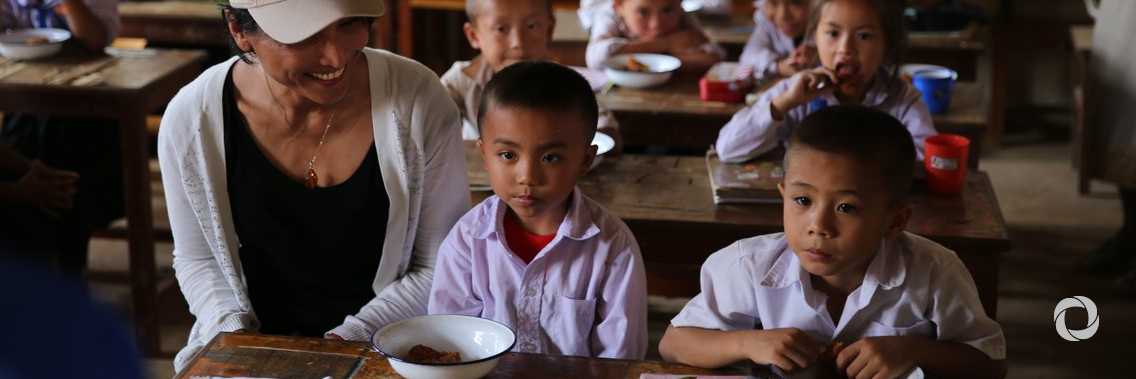
Currently, children in 1,450 schools across eight provinces receive a nutritious meal, consisting of 100g of rice, 40g of lentils and 10g of oil from the United States. The meals are complemented with canned fish from the Government of Japan, as well as community and school garden contributions of vegetables and greens.
WFP’s school meals programme is a holistic package of assistance to strengthen the communities in leading the school meals programme. The package of assistance seeks to create an enabling environment and promote sustainability and local ownership. Children in supported schools have been able to advance their reading and writing skills through literacy activities, and school conditions have improved through the installation of water supply, hand washing stations, community fish ponds, school gardens and greenhouses.
Primary school enrollment rates have improved by an average of 14 percent in the areas supported by the school meals programme.
An additional United States program called the “Local and Regional Food Aid Procurement Program” also administered by the USDA, uses US$1 million to link school meals to local agricultural production. The program aims to build the capacity of smallholder farmers, particularly women, by increasing their production and creating a local market for their products. Since schools procure these farmers’ fresh products, the program leads to greater community ownership and sustainability of the school meals programme in the long term.
“Ensuring that school meals are organized nationally is our main focus at WFP at the moment,” said Jan Delbaere, WFP Country Director and Representative. “We are working closely with the Ministry of Education and Sports to warrant sustainability of the programme. While delivery of food to schools is gradually phased out as we move towards providing local food and national and local contributions, we are very happy that the United States continues to support school meals in this crucial period of transition,” he said.
Original source: WFP
Published on 10 May 2019