
Add us as your preferred source on Google to see more of our content in Search.
 Add to Preferred Sources
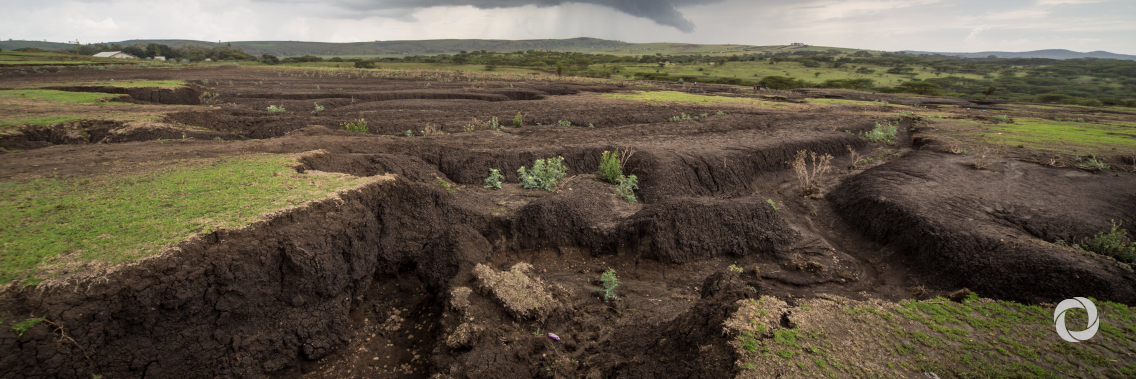
Wind, rain and industrial farming techniques accelerates soil erosion and can be mitigated before the world faces calamitous losses in terms of agricultural yields and critical ecosystem functions.
“The negative impacts of soil erosion are ever more evident and the need to work jointly ever more urgent,” FAO Deputy Director-General, Climate and Natural Resources, Maria Helena Semedo, said while opening a three-day symposium focusing on enhancing how the world measures and manages soil erosion as well as its economic costs.
“We have solutions,” she said. “Preventing soil erosion through education, advocacy and concrete actions in the field are the best way to maintain healthy soils and help achieve the Sustainable Development Goals.”
Today the equivalent of one soccer pitch of soil is eroded every five seconds, and the planet is on a path that could lead to the degradation of more than 90 percent of all the Earth’s soils by 2050, Semedo said. Erosion, triggered by intensive agriculture, tillage, mono-cropping, overgrazing, urban sprawl, deforestation and industrial and mining activities, all contribute to accelerating soil erosion, which can result in crop yield losses of up to 50 percent, she added.
As organic carbon particles are the most vulnerable to being washed or blown away, erosion also reduces soil’s potential to help mitigate and adapt to climate change, triggering a “vicious cycle” in which extreme weather events and soil erosion reinforce each other, Semedo said.
The Global Symposium on Soil Erosion is co-organized by FAO, the Global Soil Partnership, the Intergovernmental Technical Panel on Soils, the UN Convention to Combat Desertification and a joint programme run by FAO with the International Atomic Energy Association to develop uses for nuclear techniques for food and agriculture.
FAO launched Soil erosion: the greatest challenge for sustainable soil management, at the symposium.
The 100-page book takes stock of the current state of knowledge regarding soil erosion. More research has been published on the topic in the past three years than in the entire 20th century.
Original source: FAO
Published on 15 May 2019