
Add us as your preferred source on Google to see more of our content in Search.
 Add to Preferred Sources
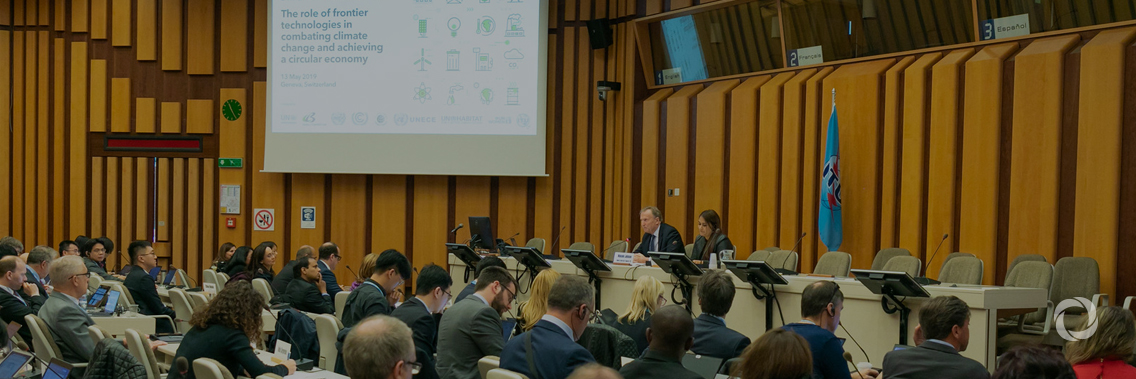
Industry experts, policymakers, and representatives from the ICT sector, international organizations, and academia have come together to discuss the role of frontier technologies, such as artificial intelligence (AI) and the Internet of Things, in combating climate change and achieving a circular economy.
The 13th Symposium on ICT, Environment and Climate Change was co-organized by a number of UN agencies, including the UN Industrial Development Organization (UNIDO), and was hosted by the International Telecommunication Union (ITU) at their Geneva headquarters.
The potential of frontier technologies to help to lower carbon emissions, boost climate resilience and support the transition to a circular economy represents a significant opportunity for stakeholders to progress with the goals of the 2030 Agenda for Sustainable Development, including Sustainable Development Goal (SDG) 9 on industry, innovation and infrastructure.
The event was opened by ITU’s Deputy Secretary-General, Malcolm Johnson, who emphasized the importance of the three C’s – collaboration, cooperation and coordination.
“We need innovative solutions to the way we produce goods and services,” he affirmed in his opening remarks.
The importance of partnerships was prominent throughout the day’s discussions, during which participants learnt about how frontier technologies are helping to boost climate actions, from satellite data to support farmers with harvesting to tropical weather forecasts.
The role of data in combating climate change and achieving a circular economy was also discussed, with numerous examples given of ways in which Big Data and augmented realities are being used to power decisions to improve the lives of people across the world from Dubai to Norway. In a pilot project in the Norwegian town of Ålesund, traffic data has been used to help to halve emergency service response times, while in Dubai the implementation of circular ICT services and infrastructure has resulted in significant economic savings for over 50 entities.
During the final session on the “Impacts of E-waste on Climate Change and Moving to a Circular Economy”, experts provided updates on various international efforts to improve e-waste management.
Original source: UNIDO
Published on 14 May 2019