
Add us as your preferred source on Google to see more of our content in Search.
 Add to Preferred Sources
Most people immediately associate Somalia with reports of catastrophes and horrors, including starvation, war, drought and terror. Approximately 1.5 million refugees are estimated nationwide.
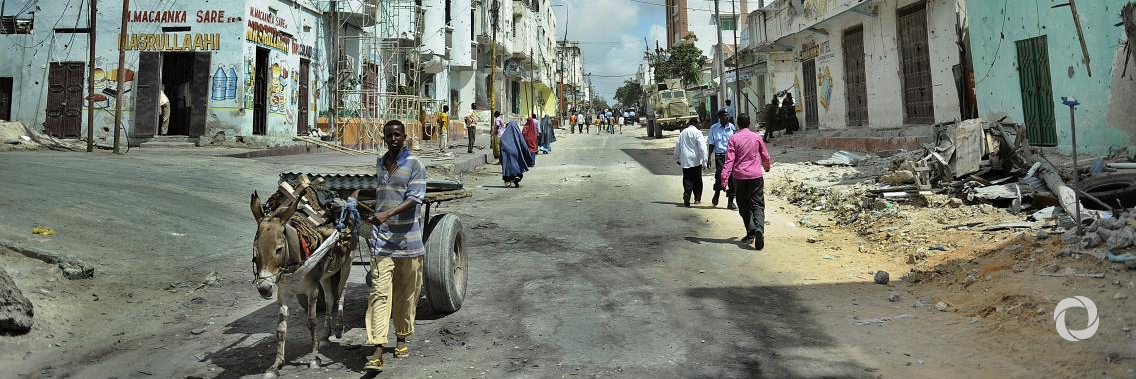
Since 2012 and for the first time in decades, Somalia has a government with the capacity to take action – albeit in a limited fashion – and that is recognised, at least in principle, by most parties to the conflict. However, the government is still struggling to fulfil its essential functions and provide the population with basic services. The country, which has been destroyed by years of armed conflict, lacks infrastructure in the areas of transport, health, education, water and sanitation and solid waste disposal. Add to this frequent period of drought, which have always existed in Somalia, but whose rhythm has accelerated. There is little grass and little water for livestock, which is one reason why many people who previously lived off livestock farming are fleeing to cities in the hope of new prospects.
About 2.2 million people live in three cities in the south of the country – Mogadishu, Kismayo and Baidoa – many of them internally displaced persons and returnees who come mainly from the Kenyan refugee camp Dadaab. On behalf of the German Federal Ministry for Economic Cooperation and Development (BMZ), KfW is promoting the programme “Improving living conditions in urban areas and improving the integration of returnees” with around EUR 48 million.
The programme is multi-sectoral in nature and includes measures such as waste disposal, the construction of roads, marketplaces, water and sewage pipelines, among other things. In the first phase of the project, the programme will focus on road construction and related drainage, as well as street lighting for the cities involved in the project.
In spring 2019, the ceremonial launch of a sub-project for the rehabilitation of roads in Mogadishu took place. The Mayor of Mogadishu officially opened the construction works by laying the first paving stones. For the citizens of Mogadishu, this is a major hopeful step and a symbol for the advancement of state-building in Somalia, which besides the reconstruction of the infrastructure is an important goal of the project.
Original source: KfW
Published on 23 May 2019