
Add us as your preferred source on Google to see more of our content in Search.
 Add to Preferred Sources
Sexual and gender-based violence is widespread in emergency settings, yet protection from this form of violence remains severely underfunded, at less than 1 percent of all funds channeled to humanitarian assistance.
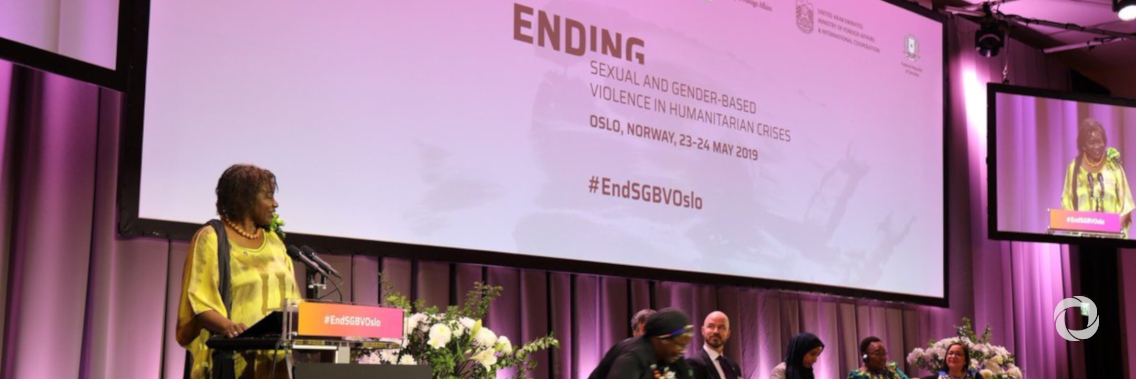
Last week, the Governments of Norway, Iraq, Somalia, the United Arab Emirates, as well as UN OCHA, UNFPA, the International Committee of the Red Cross and other partners, held a ground-breaking collaboration calling for commitments and funding to end these abuses. The two-day conference brought together delegations from 90 countries, as well as top United Nations officials, Nobel Peace Price Laureate Dr. Denis Mukwege and many civil society representatives.
“UNFPA is on the frontlines, coordinating prevention and response efforts and, with our partners, providing life-saving sexual and reproductive health care and specialized services to survivors in countries affected by humanitarian crises,” UNFPA Executive Director, Dr. Natalia Kanem, said at the event. “Yet with rising needs outpacing current resources, more and longer-term funding, including for women’s organizations, is needed to build a more effective response.”
Twenty-one donors at the conference announced a total of $363 million to address sexual and gender-based violence, UN OCHA announced.
Hundreds of commitments were also made relating to strengthening standards and legal frameworks, operational support, and services for vulnerable persons and survivors of violence.
UNFPA is in the process of scaling up services for survivors of gender-based violence, including through the Family Counselling and Development Foundation. Last year, two new centres opened up, providing mental health support to more than 7,000 survivors of gender-based violence, and to more than 9,000 other cases. More than 13,000 cases were handled through the nation-wide, toll-free hotline. UNFPA’s protection services for women in Yemen are supported by Canada, the European Union, Kuwait, the Netherlands, Saudi Arabia, Sweden, Switzerland and the United Arab Emirates.
Original source: UNFPA
Published on 28 May 2019