
Asia-Pacific ‘regional parliament’ underway to advance equality, empowerment, for more than four billion citizens
Add us as your preferred source on Google to see more of our content in Search.
 Add to Preferred Sources
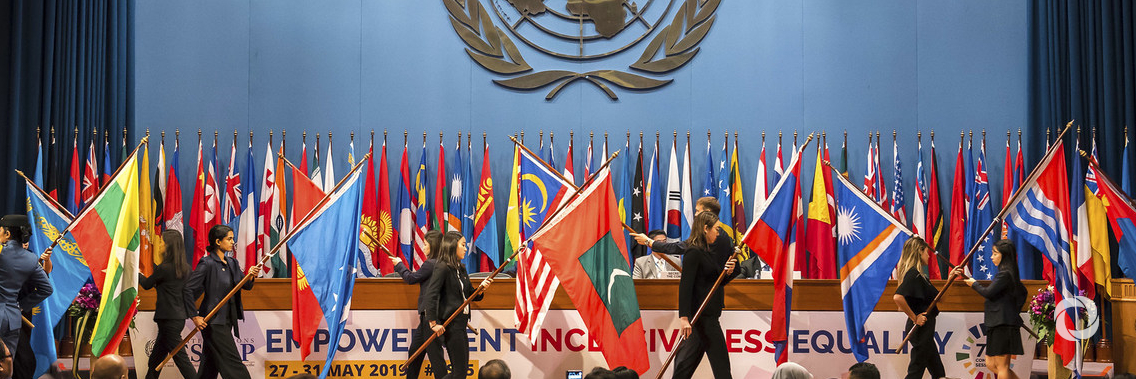
The top United Nations body in the Asia-Pacific region opened its annual session this week, calling for greater empowerment of disadvantaged and marginalized groups if the region is to achieve the ambitious 2030 Agenda for Sustainable Development and fulfill its promise to leave no one behind.
According to a study by the UN Economic and Social Commission for Asia and the Pacific (ESCAP), forming the basis for intergovernmental discussions, while the benefits of economic growth and social progress have reached rural areas, persons with disabilities and women in many countries, the divide between the haves and the have-nots, is widening.
“In recent decades, quality of life has improved for most people in the region, yet, growing inequalities present a threat to further advances”, said UN Secretary-General Antonio Guterres. “The challenge is to ensure that socio-economic progress reaches those left behind,” he added.
Recalling his recent visit to the South Pacific, where he saw the “brutal” impact of the global “climate emergency”, Mr. Guterres called on countries to redouble efforts to combat climate change in Asia and the Pacific. “This is a battle we can and must win,” he underscored.
Informally dubbed the “parliament” of the Asia-Pacific region, ESCAP – the UN’s socio-economic development arm for the area, which is home to more than 4 billion people, or nearly two-thirds of the world population – is a forum for Governments and other stakeholders to discuss key sustainable and inclusive development issues.
Established in 1947, it comprises 53 Member States and 9 associate members, stretching from the Pacific island of Tuvalu in the east, to Turkey in the west, and Russia in the north, to New Zealand in the south.
Original source: UN News
Published on 29 May 2019