
Add us as your preferred source on Google to see more of our content in Search.
 Add to Preferred Sources
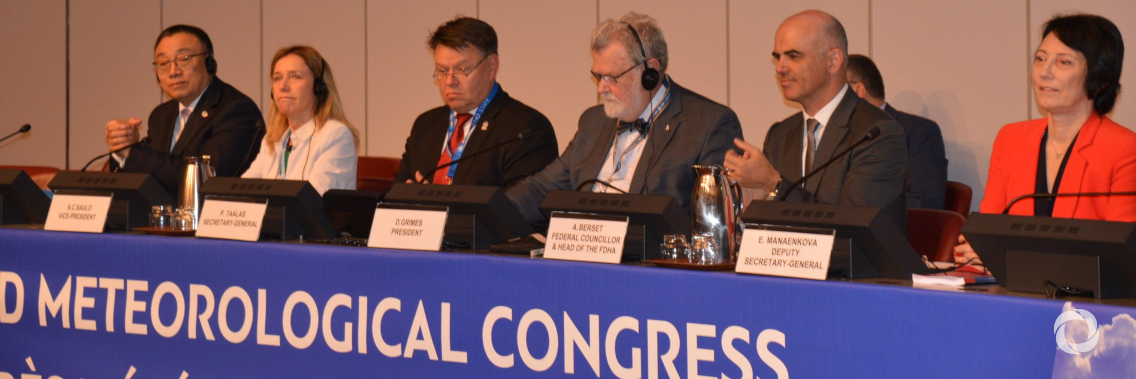
The increasing signs and impacts of climate change demand a much more focussed and integrated international response, the World Meteorological Congress was told at the start of a session intended to sharpen action to meet the challenges.
“Changes in the climate system have been accelerating over the last few decades. The number of extreme weather, water, and climate events is rising,” WMO President David Grimes told the opening ceremony of Congress. “The size of the challenges we are facing related to these hazards cannot be overstated.”
This means that traditional weather forecasts are no longer enough.
National meteorological and hydrological services face unprecedented demand for their information and expertise in the domains of climate, urban, air quality, hydrological, polar and high mountain services. And the demands are growing as a result of more extreme weather and urbanization, said Mr. Grimes.
In response to these demands, that the World Meteorological Congress is to consider proposals for ambitious reforms to chart a course for WMO’s future agenda, to streamline its decision-making and governance procedures and to embrace new partnerships. It seeks to anchor water and ocean activities firmly into WMO’s core priorities and to embrace a more integrated Earth-systems approach.
The Congress takes place every four years and decides on the strategy, policies, standards, budget and office holders of the 193-member WMO.
It is due to approve a new WMO strategic plan to achieve its overarching vision: “By 2030, a world where all nations, especially the most vulnerable, are more resilient to the socioeconomic impact of extreme weather, water, climate and other environmental events; and empowered to boost their sustainable development through the best possible services, whether over land, at sea or in the air.”
One of the priorities of Congress will be to reduce the capacity gap between developed and least developed and to increase the ability of vulnerable countries to adapt to climate change and build resilience to extreme weather.
Other items on the agenda include strengthening the observation network which underpins all forecasts; improved weather and climate services in an era of climate change and more extreme weather; hydrological services and support of sustainable water management; integrated Earth systems science; facilitating capacity development; engagement with the private sector and data policy.
There will be a dedicated ocean dialogue, a session on scaling up development partnerships, a parallel hydrological assembly and a public-private dialogue and Meteorological Technology world expo showcasing the very latest climate, weather and hydrometeorological forecasting, measurement and analysis technologies.
Original source: WMO
Published on 03 June 2019