
Add us as your preferred source on Google to see more of our content in Search.
 Add to Preferred Sources
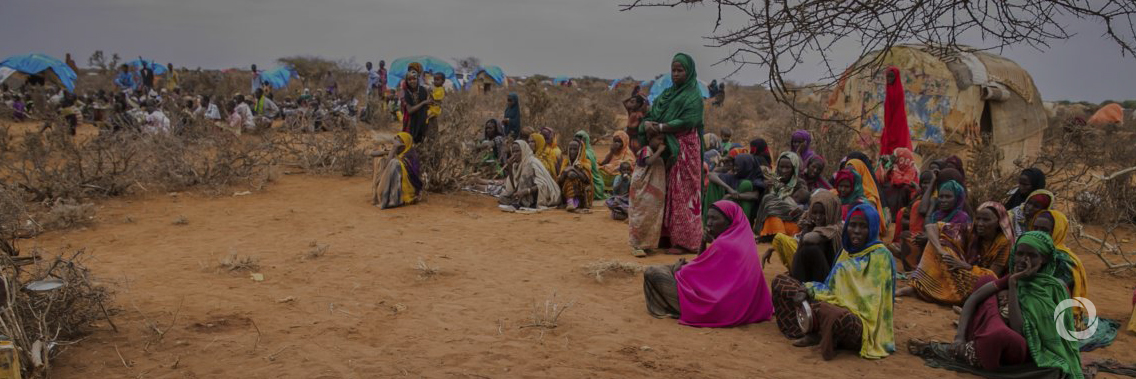
UN Humanitarian Chief Mark Lowcock allocated US$45 million from the Central Emergency Response Fund (CERF) to immediately scale up food and nutrition assistance, safe water provision, livelihoods protection, and other urgent humanitarian support to drought-affected people across parts of Somalia, Ethiopia and Kenya who are facing acute food problems following another season of failed rains.
CERF’s allocation will complement the three governments’ efforts through targeted assistance to men, women, girls and boys, especially those with disabilities.
The bulk of the funds, $30 million, will go to Somalia where 2.2 million people are projected to face acute food insecurity by September, over 40 percent more than in January this year. A further 3.2 million people are expected to struggle just to meet minimum food requirements over the same period.
“CERF’s rapid response allocation will allow humanitarian organizations to quickly scale up assistance to save lives, especially in Somalia, where drought has intensified faster than has been seen over the last decade, leading to a rapidly deteriorating humanitarian situation,” said Mr. Lowcock. “What was forecast to be an average rainy season in Somalia is now one of the driest on record in over 35 years.”
Meanwhile, the neighbouring Somali region of Ethiopia is experiencing a second consecutive drought season while still reeling from the effects of the prolonged drought in 2016 and 2017. Announcing CERF’s contribution of $10 million, Mr. Lowcock urged donors to increase their support for drought response, in addition to critical assistance to the ongoing nationwide response to internal displacement.
In Kenya, CERF’s allocation of $5 million will complement the government’s hunger safety net programme. Parts of the arid and semi-arid regions of Kenya are hard hit by drought following a delayed start to the March to May rains.
With droughts remaining a recurrent weather phenomenon across the Horn of Africa region, Mr. Lowcock has been calling for more systematic early action, including the release of funds, based on early warnings, to help mitigate expected humanitarian consequences through a range of activities carried out before the onset of a crisis.
“We need to move to a system where we act much earlier on the warning signs of drought and hunger so that we can cut response times and costs and reduce deaths and human suffering,” he said.
OCHA and humanitarian partners are laying the groundwork for a CERF-supported anticipatory action pilot in Somalia to prevent famine from taking hold. Funding would be released when a pre-agreed threshold based on forecasting information and early warning data is reached and would be tied to a pre-agreed early action plan.
Original source: UNOCHA
Published on 04 June 2019