
Add us as your preferred source on Google to see more of our content in Search.
 Add to Preferred Sources
FAO Director-General José Graziano da Silva stressed the key role played by academic and research institutions in assisting governments to introduce policy reforms aimed at ensuring that all people have access to healthy diets and can make informed choices on nutritious food.
“I would like once more to emphasize that FAO is a knowledge institution. We don’t do research, so we depend on you, on academia – we base our work on what you do. More and more, we would like to strengthen our partnership to do things together and to ensure mutual cooperation,” Graziano da Silva said.
He underscored the need for an increase in scientific evidence to inform the policies and actions taken by governments to combat malnutrition in all its forms.
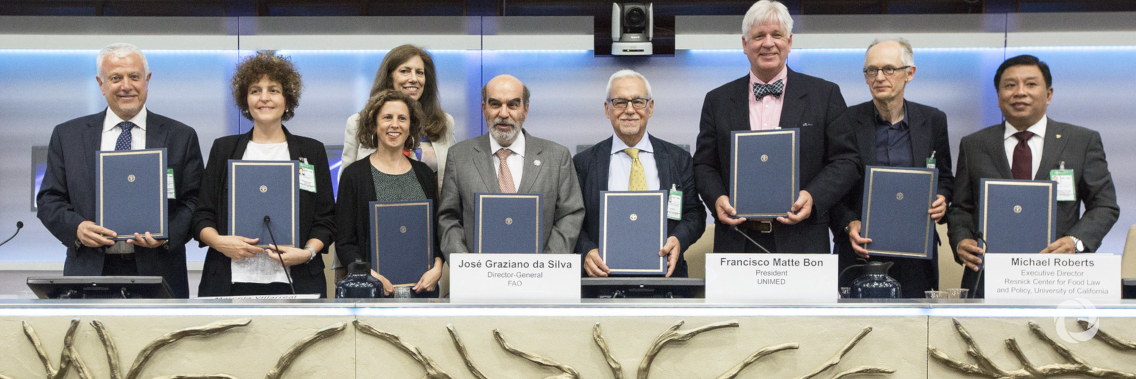
The FAO chief’s remarks came on the first day of the Future of Food international symposium, which included a roundtable with representatives of academia, and also the signing by FAO of partnership agreements with seven universities and research institutions.
The partnerships would also promote policy dialogue and enhance information and knowledge exchange in areas which include food security and nutrition, sustainable management of natural resources, and the urban food agenda.
Graziano da Silva noted how projections estimate that the number of obese people in the world will very soon overtake the number of people suffering from hunger, which currently accounts for about 821 million. There are several underlying factors driving the global pandemic of obesity and micronutrient deficiency, with one of the main drivers being the high consumption of ultra-processed foods, which are mainly based on artificial ingredients and contain high levels of saturated fats, refined sugars, salt and chemical additives.
Original source: FAO
Published on 10 June 2019