
Global response to poverty and environmental goals 'not ambitious enough’ warns UN Secretary-General in the SDGs Report
Add us as your preferred source on Google to see more of our content in Search.
 Add to Preferred Sources
The global response to realizing poverty and environmental goals agreed by world leaders in 2015 has not been “ambitious enough” according to the UN Secretary-General.
In his latest report on the progress towards meeting the targets of the 17 Sustainable Development Goals or SDGs, the UN chief António Guterres said that while a “wealth of action” had been taken by governments across the world “the most vulnerable people and countries continue to suffer the most.”
The 17 SDGs commit countries to mobilize efforts to end all forms of poverty, fight inequalities and tackle climate change.
The report tracks progress across 17 goals in the UN’s 193 Member States and largely takes a global view, however, while many trends regarding the SDGs are common to all regions, there are significant regional differences. Here are six things you need to know about progress towards some of the key SDGs.
Climate change
Described by Mr. Guterres last year as an “existential threat” to humanity, the outlook for meeting targets to reduce climate change is grim. With rising greenhouse gas emissions, climate change is occurring at rates much faster than anticipated and “its effects are clearly felt world-wide.”
While there are positive steps in terms of individual countries developing climate plans and the increase in the amount of money being found to finance those activities, Mr. Guterres said that “far more ambitious plans and accelerated action is needed” on climate mitigation and adaptation.
Poverty
Extreme poverty, which the UN defines as a condition characterized by severe deprivation of basic human needs, continues to decline but the decline has slowed to the extent that the world is not on track to achieve the target of less than three percent of the world living in extreme poverty, by 2030. It’s more likely on current estimates to be around six percent; that’s around 420 million people, a situation of “grave concern” according to the UN chief.
Historically speaking, there are reasons for optimism. The share of the world population living in extreme poverty was 10 percent in 2015, down from 16 percent in 2010 and 36 percent in 1990.
Hunger
Hunger is on the rise again globally, with an estimated 821 million people undernourished in 2017, up from 784 million in 2015. So, one in nine people across the world are not getting enough to eat.
The developing world is most acutely affected by this lack of investment. The share of small-scale food producers in countries in Africa, Asia and Latin America ranges from 40 percent to 85 percent, compared to less than 10 percent in Europe.
Health
Major progress has been made in improving the health of millions of people, increasing life expectancy, reducing maternal and child mortality, and the fight against the most dangerous communicable diseases.
Progress has stalled or is not happening fast enough in addressing major diseases, such as malaria and tuberculosis, while at least half of the global population, that’s some 3.5 billion people, do not have access to essential health services.
Mr. Guterres said that “concerted efforts are required to achieve universal health coverage, sustainable financing for health and to address the growing burden of non-communicable diseases including mental health.”
Gender Equality
Gender violence persists. Globally, about a fifth of women aged 15 to 49, experienced physical or sexual partner-inflicted violence in the last 12 months. The prevalence is highest in the 47 poorest countries in the world, a group the UN calls the Least Developed Countries or LDCs.
While some indicators of gender equality are progressing, such as a significant decline in the prevalence of female genital mutilation and early marriage, the overall numbers continue to be high.
The UN Secretary-General has said “there is simply no way that we can achieve the 17 SDGs without achieving gender equality and empowering women and girls.”
Jobs and employment
Experts agree that economic growth which includes all sections of society and which is sustainable, can drive progress and generate the means to implement the SDGs. Globally, labour productivity has increased and unemployment is back to levels seen before the financial crash of 2008, however, the global economy is growing at a slower rate. And young people are three times more likely to be unemployed than adults.
Mr. Guterres said that “more progress is needed to increase employment opportunities, particularly for young people, reduce informal employment and the gender pay gap, and promote safe and secure working environments to create decent work for all.”
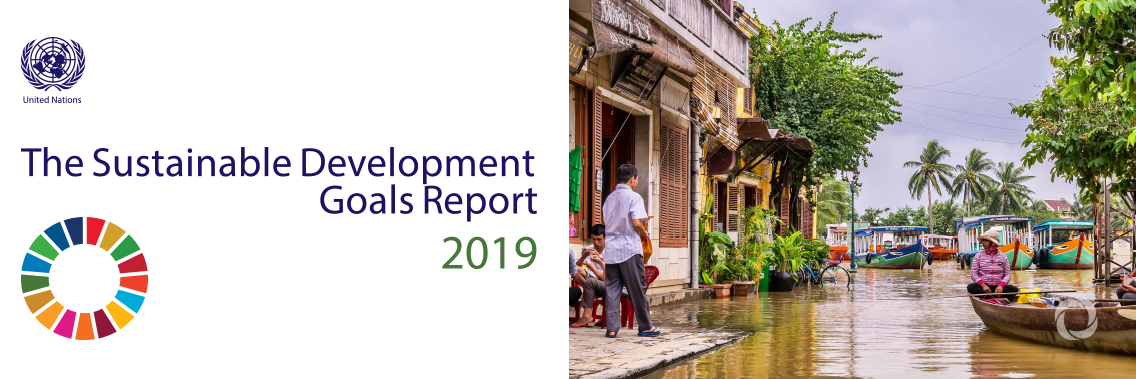
Read and download The Sustainable Development Goals Report 2019.
Original source: UN News
Published on 09 July 2019