
Add us as your preferred source on Google to see more of our content in Search.
 Add to Preferred Sources
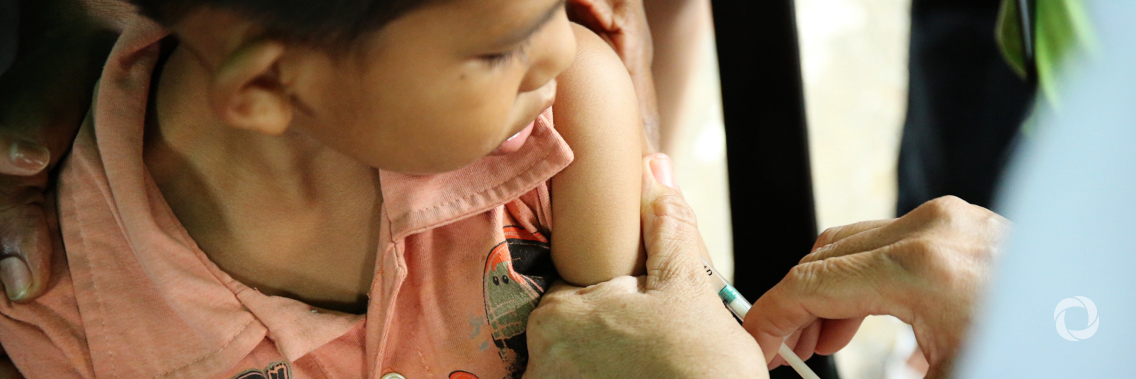
20 million children worldwide – more than 1 in 10 – missed out on lifesaving vaccines such as measles, diphtheria and tetanus in 2018, according to new data from WHO and UNICEF.
Globally, since 2010, vaccination coverage with three doses of diphtheria, tetanus and pertussis (DTP3) and one dose of the measles vaccine has stalled at around 86 percent. While high, this is not sufficient. 95 percent coverage is needed – globally, across countries, and communities – to protect against outbreaks of vaccine-preventable diseases.
“Vaccines are one of our most important tools for preventing outbreaks and keeping the world safe,” said Dr. Tedros Adhanom Ghebreyesus, Director-General of the World Health Organization. “While most children today are being vaccinated, far too many are left behind. Unacceptably, it’s often those who are most at risk– the poorest, the most marginalized, those touched by conflict or forced from their homes – who are persistently missed.”
Most unvaccinated children live in the poorest countries and are disproportionately in fragile or conflict-affected states. Almost half are in just 16 countries – Afghanistan, the Central African Republic, Chad, Democratic Republic of the Congo (DRC), Ethiopia, Haiti, Iraq, Mali, Niger, Nigeria, Pakistan, Somalia, South Sudan, Sudan, Syria and Yemen.
If these children do get sick, they are at risk of the severest health consequences, and least likely to access lifesaving treatment and care.
Since 2000, WHO and UNICEF jointly produce national immunization coverage estimates for Member States on an annual basis. In addition to producing the immunization coverage estimates for 2018, the WHO and UNICEF estimation process revises the entire historical series of immunization data with the latest available information. The 2018 revision covers 39 years of coverage estimates, from 1980 to 2018. DTP3 coverage is used as an indicator to assess the proportion of children vaccinated and is calculated for children under one year of age. The estimated number of vaccinated children are calculated using population data provided by the 2019 World Population Prospects (WPP) from the UN.
Original source: WHO
Published on 15 July 2019