
Add us as your preferred source on Google to see more of our content in Search.
 Add to Preferred Sources
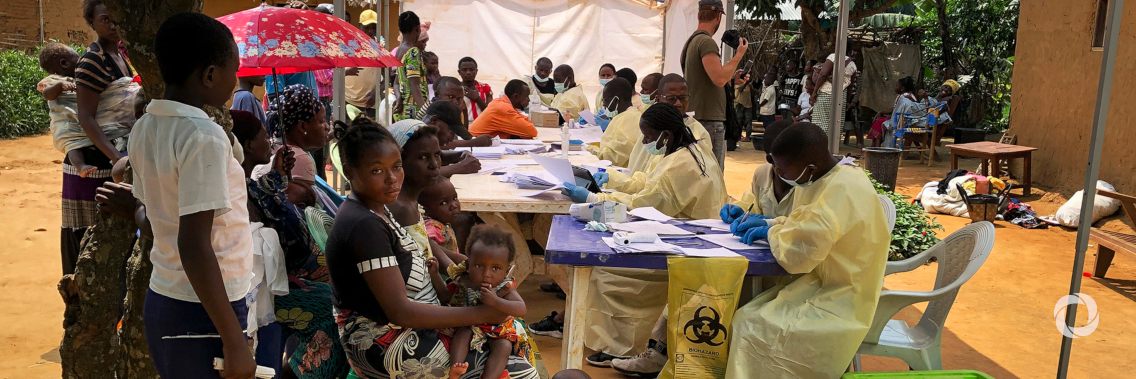
The Ebola outbreak in eastern Democratic Republic of the Congo (DRC) is at a critical juncture. The United Nations hosted a high-level meeting in Geneva to take stock of the coordinated response and mobilize further support for the Government-led effort to defeat the deadly disease.
Now in its twelfth month, the virus has so far claimed more than 1,650 lives, placing a huge burden on the country. Among those affected by the virus, more than 57 percent are women.
ERC Lowcock commended the Government, the people and the institutions of DRC for their efforts on the response to date. Since the start, WHO and its partners have been on the frontline of the international community’s support for the Government-led response.
However, early this year it became clear that more support from the rest of the UN system was needed to help create the conditions where the Government and WHO could ensure that the public health response could be successful. But there are several issues to be considered to make the response more effective.
One of them is security for the response, which Mr. Lowcock underlined is pivotal to the United Nations’ ability to support the Government and strengthen the ongoing response.
“The outbreak in DRC is taking place in an insecure and complex area, with multiple armed groups present and large-scale pre-existing humanitarian needs”, he said. These factors can create distrust and complications, which can endanger the lives of aid workers.
These concerns were also raised by Dr. Tedros, “Together with the government, we can and will end this outbreak. We have better public health tools than ever to respond to Ebola, including an effective vaccine. But we need to see an end to the attacks and other disruptions to the response.”
The need to provide more funds to sustain and scale-up the response has become urgent. Earlier this month, new cases were reported in Uganda and the first case was registered in Goma city in DRC, on the country’s border with Rwanda.
The ERC said, “If we don’t get an increase in the funding available, treatment centers are going to close. There will fewer teams to conduct training or to give life-saving vaccinations. There will be fewer mobile teams available to immediately investigate, isolate, treat and trace each new case, no matter where the disease pops up… Unless we are able to scale up to deal with the risk of spread, again we will not be successful in getting to zero cases. “
Original source: UNOCHA
Published on 15 July 2019