
Add us as your preferred source on Google to see more of our content in Search.
 Add to Preferred Sources
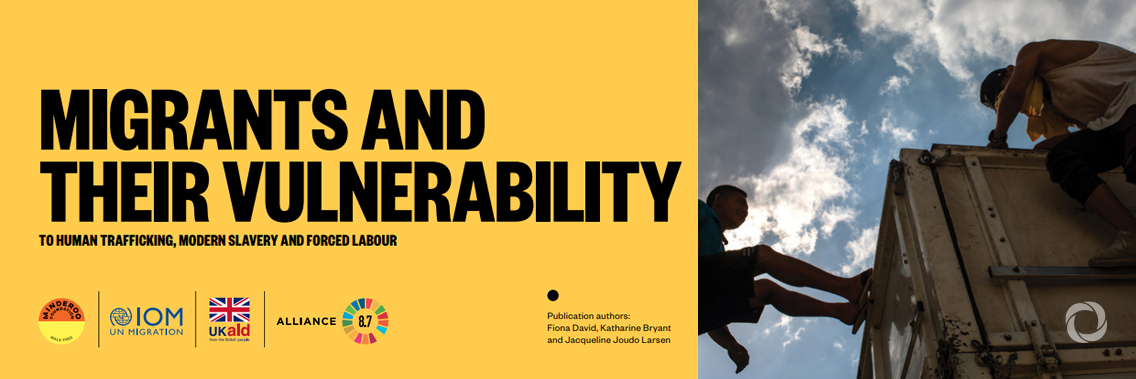
A new report examines the connection between migration and modern slavery and focuses on which migrants are most vulnerable to being forced into modern slavery, and under what circumstances.
Prepared by Minderoo Foundation’s Walk Free initiative and the International Organization for Migration (IOM) for the Alliance 8.7 Action Group on Migration, the report provides recommendations on key steps governments can take to address this risk.
The report confirms certain sub-groups of migrants are at particular risk. These include migrants who are fleeing violence and conflict, migrants who have been dislocated from community and family support structures without access to legitimate forms of employment, legal status or social protection, and migrants who are moving or working through irregular channels. Other vulnerable types include migrants who are working in sectors that are out of sight (such as work at sea or in private homes) or in sectors of the economy that are not covered by labour laws.
Child and adolescent migrants are particularly vulnerable, creating the need for governments to offer better protection, such as family reunification schemes. Female and male migrants are vulnerable to abuse but in different ways – with women experiencing higher rates of modern slavery in domestic work, the sex industry and through forced marriage – while male migrants are more likely to be exploited through forced labour in the construction and manufacturing sectors.
The report notes that some government policies could have the effect of increasing vulnerability of certain groups of migrants. Restrictive migration policies that seek to ban or limit certain forms of migration can have unintended consequences, such as driving risky practices underground or trapping vulnerable people in dangerous situations.
Migrant workers face risk through policies in both sending and receiving countries. In many countries, recruiters are subject to little or no regulation, so they continue to charge migrants high fees, sometimes repayable at high interest rates, simply to connect them with available jobs.
“Without action to address the drivers of unsafe migration and to step up protection and assistance to migrants, many migrants will be trafficked and otherwise abused. We need to do the hard work to create safe migration pathways that better reflect the realities of migration and labour markets, as well as balance the needs of national interests and migrant rights. The recently agreed Global Compact for Safe Orderly and Regular Migration provides a roadmap for how to move forward,” said Mathieu Luciano, Head of IOM’s Assistance to Vulnerable Migrants Unit in Geneva.
Read and download the report: Migrants and their vulnerability.
Original source: IOM
Published on 26 July 2019