
Add us as your preferred source on Google to see more of our content in Search.
 Add to Preferred Sources
Updates on the Ebola outbreak response in the Democratic Republic of Congo, 3,5 million people severely food insecure in Zimbabwe and Venezuelans fleeing their country continue to face risks during their journey. Here is what you missed from last week’s headlines in the international development sector:
Main story: updates on the Ebola outbreak, a public health emergency of international concern
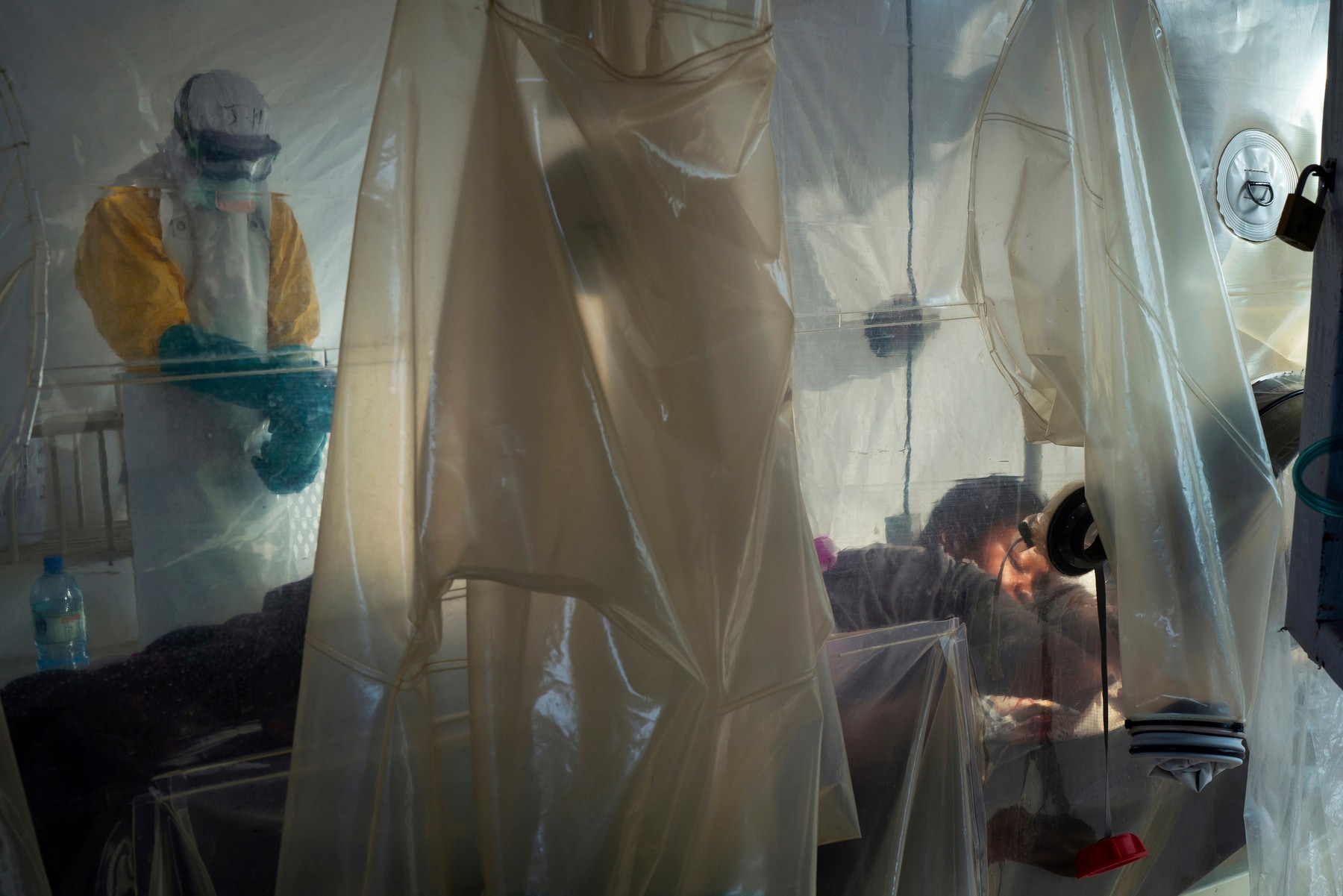
The problems of eradicating Ebola in the Democratic Republic of the Congo are not only medical but also linked “to a variety of political and social factors”, the head of the UN mission in the country told the Security Council last week.
“Along with continuing high levels of community distrust around the response to the epidemic”, Leila Zerrougui – UN Special Representative and head of the UN’s Stabilization Mission (MONUSCO) – said that militants, including the ADF and Mai-Mai groups, have caused “a deadly environment” for the people working to counter the virus, “to the point of being specifically threatened and killed by armed groups”.
She stated that the Ebola epidemic has now “claimed the lives of more than 1,700 people” and recent isolated cases in Goma and across the border in Uganda “have heightened concerns about its spread outside of the Beni and Butembo areas”.
In the same time, WHO Director-General Dr. Tedros Adhanom Ghebreyesus commended Rwanda on its ongoing Ebola preparedness efforts and confirmed that no cases of Ebola have been reported from the country to date.
“Rwanda has been proactive and engaged in Ebola preparedness at all levels since the outbreak was declared almost one year ago in neighbouring Democratic Republic of the Congo. We commend the actions taken so far and confirm that there have been no cases of Ebola in Rwanda to date, despite high levels of traffic and movement of people between the two countries,” said Dr. Tedros.
Rwanda has a detailed National Preparedness Plan in place and is training health workers in early detection and response, educating communities about Ebola, vaccinating health workers in high-risk areas, equipping health facilities, and conducting simulation exercises to maintain a high level of readiness.
“Rwanda has made a significant investment in Ebola preparedness, but as long as the outbreak continues in the Democratic Republic of the Congo, there is a very real risk of spread to neighbouring countries. We urge the international community to continue supporting this critical work,” said Dr. Tedros.
In what concerns the international assistance, several donors have already committed to providing financial support to contain the outbreak in DRC. The United States, through the U.S. Agency for International Development (USAID), is providing more than $38 million in additional assistance, the World Bank Group announced that it is mobilizing up to US$300 million and the EU is contributing a further €30 million in humanitarian funding for Ebola response efforts.
The current outbreak of Ebola is the second-largest ever recorded, with 2,592 confirmed and probable cases and at least 1,743 related deaths as of July 22. The DRC has fought and controlled nine other outbreaks of Ebola successfully, with the help of the international community.
Here’s what else has happened
Zimbabwe: Severe drought has rendered around 3.5 million people dangerously food insecure, the UN World Food Programme revealed. WFP said that the hunger period will peak at the height of the lean season, from January through March 2020, when 59 percent of rural households, or over 5.5 million people, will be food insecure.
EU Facility for Refugees in Turkey: The European Commission adopted a new set of assistance measures worth €1.41 billion as part of the second tranche of the Facility for Refugees in Turkey. The programmes will focus on the areas of health, protection, socio-economic support and municipal infrastructure.
Child labour: The United Nations General Assembly has adopted a resolution declaring 2021 as the International Year for the Elimination of Child Labour. Among others, the resolution highlights the member States’ commitments to end child labour in all its forms by 2025.
African Peace Facility: EU commited a further €800 million to support the African Union in its efforts to promote peace, security and stability in Africa. Among others, the EU will support the financing of African-led peace support operations, such as the Multinational Joint Task Force (MNJTF) against Boko Haram, the African Union Mission to Somalia (AMISOM) or the G5 Sahel Joint Force specifically, with regards to capacity building, troop allowances, and non-lethal equipment.
Reports
2018 Return and Reintegration Key Highlights
In 2018, IOM assisted a total of 63,316 migrants in returning home through its Assisted Voluntary Return and Reintegration (AVRR) programmes, says the 2018 Return and Reintegration Key Highlights report, which provides trends and figures on the number of migrants assisted to return, voluntarily, to their countries of origin, as well as efforts IOM has made to assist and reintegrate these returnees into their communities during the past year.
2018 confirmed certain key trends, such as an increase in assisted voluntary returns from regions outside the European Economic Area (EEA) and Switzerland, particularly in West and Central Africa, as well as an increase in the caseload of migrants in vulnerable situations assisted worldwide.
“2018 was a particularly eventful year in the field of migration, including on return and reintegration,” said Anh Nguyen, Head of IOM’s Migrant Protection and Assistance Division. “This publication is key in highlighting global trends and initiatives undertaken by IOM and its partners all over the world to ensure that return takes place in a safe and dignified manner and that reintegration is sustainable,” he added.
Of the 63,316 migrants assisted last year, almost half – 30,919 individuals, or 49 percent of all AVRR beneficiaries – were reached by IOM in just two countries, Germany and Niger, highlights the report.
Protection Monitoring: Venezuela situation
A survey has found that 50% of the Venezuelan families who have fled their country faced or continue to face specific risks during their journey because of their age, gender, health or other needs, or because they had to make drastic choices to cope.
The Protection Monitoring: Venezuela situation survey reports that, although governments in the region have issued various temporary permits to Venezuelans, 34% of those interviewed said they did not have any kind of documentation, either because they had entered a country irregularly or because their permits had expired. The rest had tourist or temporary visas, with just 4 % having permanent residency.
Some 66% of interviewees have also said they were unemployed or working informally, and 43% said they had faced difficulties in finding accommodation, mostly due to lack of funds and documents, as well as discrimination because of their nationality.
The interviews – undertaken in Argentina, Brazil, Chile, Colombia, Dominican Republic, Ecuador, Peru, and Uruguay – are part of coordinated efforts by the UN Refugee Agency, municipalities, NGO partners and Government ministries to gain a comprehensive overview of the protection risks and limited access to rights faced by Venezuelans in countries of transit or destination, as well as their needs.
Events
U.S.-China Healthcare Symposium
Washington, D.C., USA
26 August 2019
USTDA will host the U.S.-China Healthcare Symposium, where U.S. firms can learn about upcoming project opportunities and connect with key decision-makers from China. The event will also allow the Chinese delegation to learn about U.S. best practices that can support a growing demand for quality healthcare facilities, management and policies.
3rd World Symposium on Climate Change Adaptation
Akure, Nigeria
11-13 September 2019
The “3rd World Symposium on Climate Change Adaptation” will focus on “climate change adaptation to address poverty and ensure sustainable livelihoods”, and will contribute to the further development of this fast-growing field.
15th Conference on International Education and Development
Oxford, UK
17-19 September 2019
The conference will explore inclusive education through a number of themes, including future directions in inclusive education systems; problematizing inclusive systems; education financing for global equity and inclusion; and education technology and data science for inclusive systems.
The 7th Vienna Forum on European Energy Law
Vienna, Austria
19-20 September 2019
In an ever-changing energy landscape, the Vienna Forum on European Energy Law considers the complex and challenging legal aspects of EU energy policy, and the opportunities of integration with the EU internal energy market. This year marks the 7th edition of the forum.