
Add us as your preferred source on Google to see more of our content in Search.
 Add to Preferred Sources
Businesspeople and advocates for the Asia-Pacific Economic Cooperation, or APEC, urged the region’s leaders to use APEC as an avenue for achieving more progress, such as developing workers’ skills for the digital economy or deepening policy reforms.
“The world needs an organization a lot like APEC going forward. Not a negotiating organization, but a consensus-building organization that works on new areas,” said Ho Meng Kit, CEO of the Singapore Business Federation, at an APEC policy forum attended by leading figures of the diplomatic corps, the business community and academia.
“The world needs APEC more than ever,” Ho continued. “This is one point that we want to make to APEC’s leaders: let’s preserve the institutional value of APEC.”
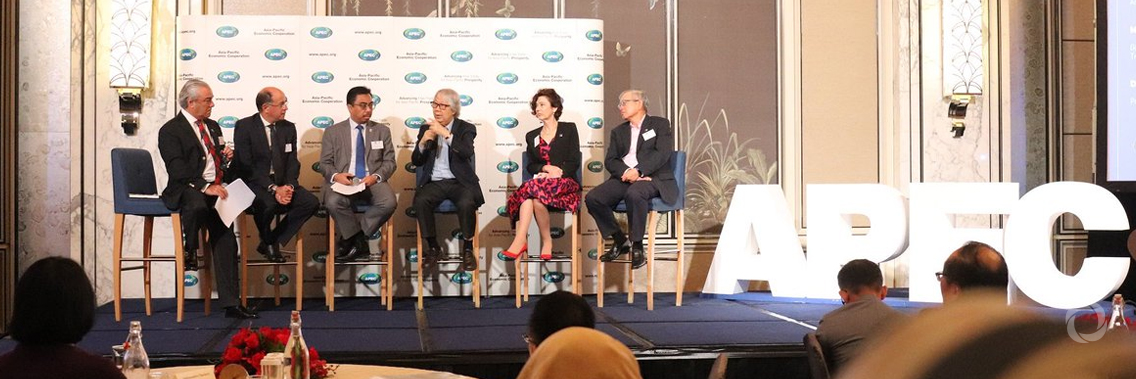
The forum, hosted by the APEC Secretariat and APEC Chile 2019, highlighted both APEC’s successes and the challenges it faces ahead.
Since the establishment of APEC in 1989, economic growth fueled by trade – which grew at an average rate of 7.1 percent per year – has lifted a billion people out of poverty and many into the middle class.
Today, the growth of merchandise trade – of exports and imports, in both volume and value – is moderating. In 2018, APEC exports fell to below half of the global total, from a little above 50 percent in previous years, according to the most recent APEC Regional Trends and Analysis report. At the same time, trade-restrictive measures are increasing.
Hairil Yahri Yaacob, Deputy Secretary-General of the Ministry of International Trade and Industry of Malaysia, the host of APEC next year, said that working towards more equitable sharing of prosperity can help strengthen public confidence in free and open trade.
“It is very important that all the benefits do not just go to big businesses or the big players, but must trickle down to the person on the street,” said Yaacob.
Original source: APEC
Published on 30 July 2019