
Add us as your preferred source on Google to see more of our content in Search.
 Add to Preferred Sources
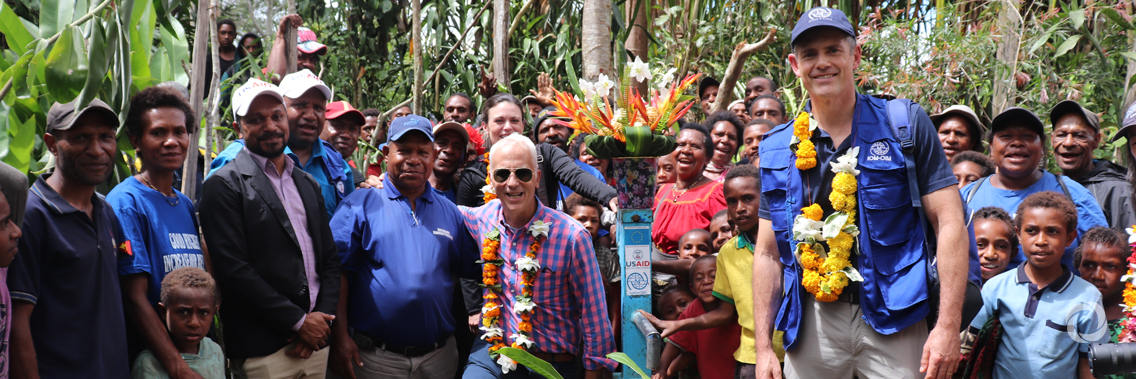
A United States Government delegation visited Kilip community eager to see the sustainable water supply and climate-resilient agriculture project installed here in 2016 in response to the El Niño-induced drought.
As part of its project, the International Organization for Migration (IOM) drilled 17 boreholes, giving access to safe drinking water to over 65,000 people across three provinces, namely Jiwaka, Enga and Chimbu.
Jointly funded by USAID and the European Commission, IOM’s Enhancing Climate-Resilient Agriculture and Water Supply in Drought-Affected Communities in Papua New Guinea project targeted the most-affected villages in the three provinces.
IOM also conducted participatory health and hygiene education instruction to some 15,777 beneficiaries in the communities most affected by drought. Also, part of the project: Pump-minder trainings for selected 30 community members in the targeted areas, where IOM equipped beneficiaries with practical skills, tools and personal protective gear to carry out maintenance for 17 boreholes, which will help guarantee their maintenance and sustainability.
Three years on, Kilip villagers and neighbouring communities continue to experience the benefits under the project.
During the visit by the US Government delegation, community members highlighted several benefits arising from the project including improved food security, access to safe drinking water and a decline in disease outbreaks.
IOM also implemented a sustainable agriculture intervention through technical trainings to 100 master farmers that reflect the understanding and improvement of the local and indigenous farming practices. The training focused on promoting community resilience while encouraging the use of locally developed hybrid varieties of crops and vegetables.
Enhancing the resilience of local communities and building the capacity of local farmers in sustainable agricultural practices is contributing to long-lasting impacts. Beneficiaries of rice farming (training, tools and seeds distribution) now are recording three harvests each year and reporting improved food security and resilient livelihood.
Original source: IOM
Published on 06 August 2019