
Add us as your preferred source on Google to see more of our content in Search.
 Add to Preferred Sources
Writing in The Guardian, Islamic Relief’s Mustapha Tahir points out that in Somalia, the climate emergency is already here. The world cannot ignore it.
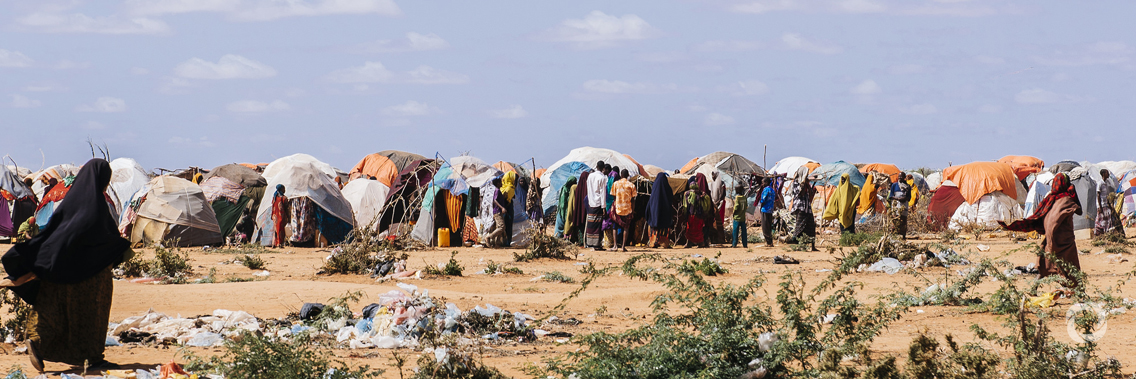
The climate emergency is wreaking havoc across the world, and it is the poorest countries that bear the brunt of the crisis. In Somalia, the population is currently experiencing a drought that could threaten the lives or livelihoods of more than two million people by the end of the summer, according to the UN.
The climate has been wreaking havoc on Somalia’s seasons. Ordinarily, there are four: the main rainy season between April and June (gu), the second rainy season between October and December (deyr), and the dry seasons that follow each of them.
Two-thirds of the country’s population live in rural areas and are completely dependent on the rains for their crops and livestock. Last year, these people were set back when the deyr season produced less rain than usual.
And again this year the gu rains almost failed, eventually arriving in tiny pockets of the country too little, too late. This has led to widespread crop failure, and a decline in livestock production, rapidly pushing communities in the worst-affected areas into food insecurity.
In recent years, the frequency and duration of these dry spells has increased. As it does so, the capacity of people to resist these shocks decreases. Every drought depletes their assets: their animals will die, their crops will fail, they will have nothing to sell and next season they won’t have money to buy seeds to plant again.
Aid agencies need more funding, and not just for immediate assistance. With the climate crisis increasing these kinds of events in frequency and intensity, we could be in this exact same situation next year, the year after, and on and on. So while the first phase of intervention should be an emergency response, we then need to build resilience so people are better prepared for the future and not reliant on handouts from the international community.
The sad thing is that around the world emergencies are on the increase: from the ongoing wars in Syria and Yemen to devastating natural disasters such as Cyclone Idai in south-east Africa. The climate crisis will only bring more disaster. But at the moment, the attention, funding and support from the international community is not there. It is crucial that, in our turbulent and increasingly unstable world, Somalia is not left behind.
Original source: Islamic Relief
Published on 05 August 2019