
Add us as your preferred source on Google to see more of our content in Search.
 Add to Preferred Sources
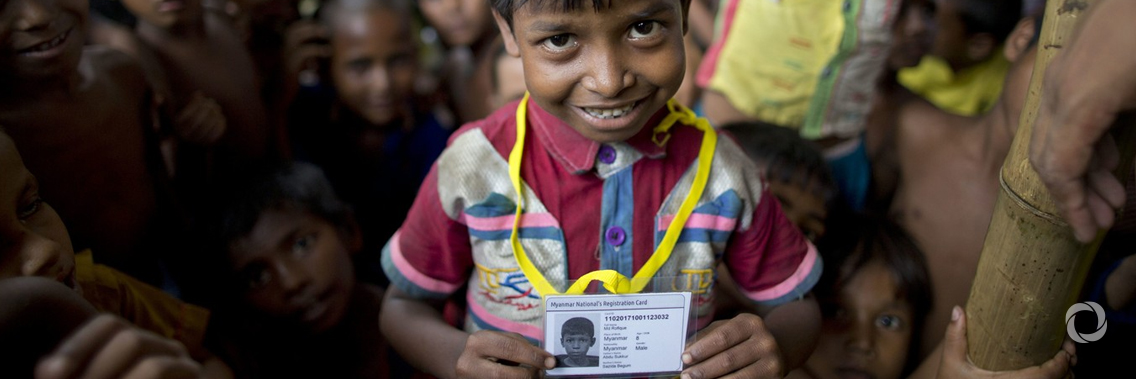
More than 500,000 Rohingya refugees from Myanmar have been registered in a joint registration exercise by the Bangladesh authorities and UNHCR, the UN Refugee Agency.
For many of these refugees, it is the first time they have an identity card. The biometric, fraud-proof cards are being issued jointly by Bangladeshi authorities and UNHCR to all verified refugees over the age of 12.
This comprehensive registration being simultaneously carried out in all refugee settlements in Cox’s Bazar – is meant to ensure the accuracy of data on refugees in Bangladesh, giving national authorities and humanitarian partners a better understanding of the population and their needs. Accurate data will help agencies in their programme planning and be able to target assistance where it is needed most, particularly for people with specific needs, such as women and children taking care of their families and people with disabilities.
Last week, using the biometric data collected during this registration exercise, UNHCR launched the Global Distribution Tool (GDT) initially in one of the refugee settlements in Cox’s Bazar. Through verification of fingerprints or iris scans, this tool speeds up distributions, is fraud-proof, and can be used by partners to ensure that there is no overlap in assistance and to ensure that nobody is left out.
The new registration cards indicate that Myanmar is the country of origin, a critical element in establishing and safeguarding the right of Rohingya refugees to return to their homes in Myanmar, if and when they decide the time is right for them to do so.
An estimated 900,000 Rohingya refugees live in crowded settlements in Cox’s Bazar, with over 740,000 thought to have fled from Myanmar since August 2017.
The registration exercise, currently underway, began in June 2018. On average, some 5,000 refugees are being registered daily at seven different sites within the settlements. More than 550 local staff have been recruited with the goal of completing the registration process during the last quarter of 2019.
UNHCR’s Biometric Identity Management System (BIMS) captures biometric data, including fingerprints and iris scans, which secure each refugee’s unique identity as well as other important information such as family links.
UNHCR is appealing to the international community to continue to support Rohingya refugees and Bangladesh. At the end of July, UNHCR and partners working on the joint refugee response in Bangladesh have received US$318 million, just over a third of the total US$920 million needed in 2019.
Original source: UNHCR
Published on 09 August 2019