
Add us as your preferred source on Google to see more of our content in Search.
 Add to Preferred Sources
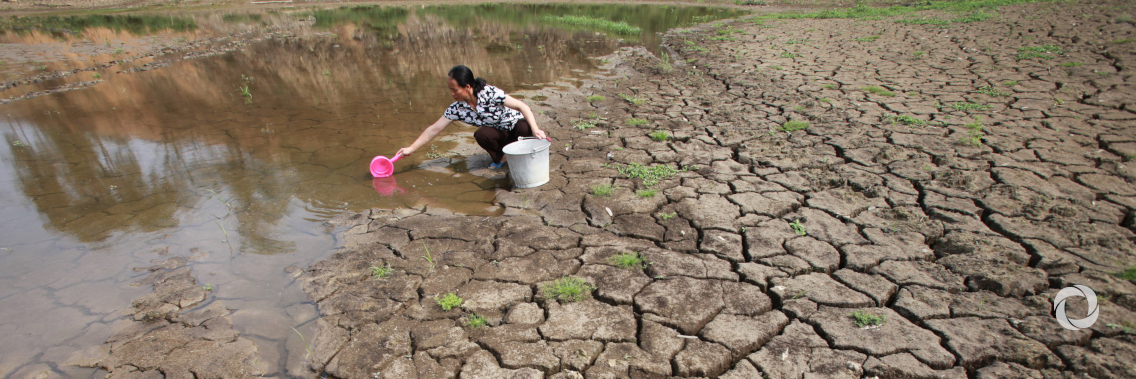
The last two years have been difficult for residents of India’s eastern city of Chennai in Tamil Nadu State. Monsoon rains have failed for two years and the city has braved a heatwave compounded by water scarcity.
On 19 June 2019, the state government announced that Day Zero—or the day when the city reservoirs were empty—had been reached. Local officials then announced that they would transport 10 million litres of water daily by train from 200 kilometres away to provide enough water, especially for the poor, to survive.
Chennai’s water stress is not unique to the city. From Cape Town, South Africa to Iran’s port city of Khorramshahr, individuals and communities in numerous countries worldwide have in recent years been suffering from water shortages.
Recent data unveiled by the Water Resources Institute in August 2019 shows that Qatar, Israel and Lebanon are experiencing an “extremely high” level of water stress with irrigated agriculture, industries and municipalities consuming, on average, more than 80 percent of their available supply annually. India was placed thirteenth among the world’s 17 most “extremely water-stressed” countries.
“Today, water remains the lifeblood of ecosystems, vital to human health and well-being and a precondition for economic prosperity. It’s really at the core of the 2030 Agenda for Sustainable Development,” says Joakim Harlin, Chief of the UN Environment Programme’s Freshwater Unit.
Sustainable Development Goal 6 seeks to “ensure availability and sustainable management of water and sanitation for all”. UN Environment is the global custodian of the goal’s indicator 6.5.1 which tracks the degree of implementation of integrated water resources management. The indicator also considers the various users and uses of water, and strives to reach positive social, economic and environmental impacts at all levels, including across borders.
In 2018, the UN Environment-DHI Partnership, a UN Environment centre of expertise dedicated to improving the management, development and use of freshwater resources, launched the report Progress On Integrated Water Resources Management, published under the UN-Water Integrated Monitoring Initiative for SDG 6.
While the vast majority of countries, 80 percent, have laid the foundations for integrated water resources management, the focus must now shift to implementation.
The UN Environment-DHI Partnership conducts extensive work on integrated water resources management worldwide, including the management of a data portal, which offers a comprehensive collection of national implementation progress data drawn from global country progress surveys.
Such data could be crucial for better management and use of water and to reduce the scarcity experienced in countries around the world.
With droughts exacerbating water shortages in some regions and negatively impacting people’s health and productivity, ensuring that everyone has access to sustainable water and sanitation services, and that water for productive uses is allocated equitable and sustainably, also requires a critical climate change adaptation and mitigation strategy for the years ahead.
Original source: UN Environment
Published on 22 August 2019