
Add us as your preferred source on Google to see more of our content in Search.
 Add to Preferred Sources
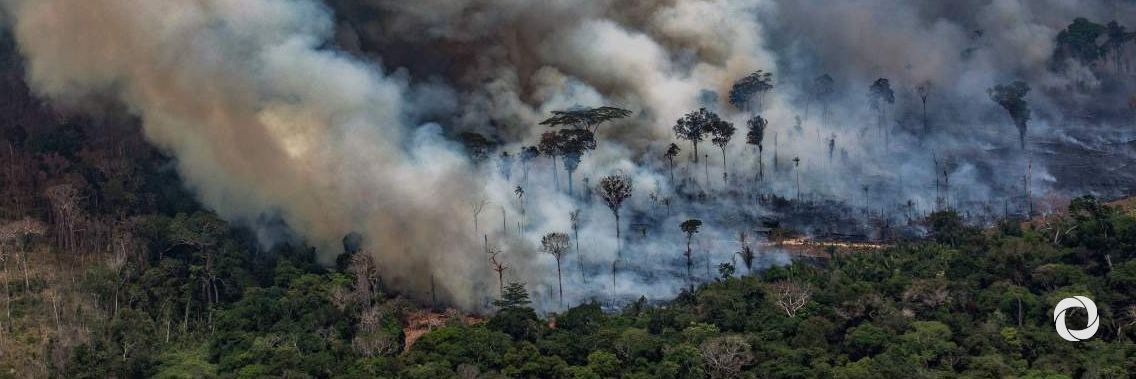
Fires that are raging in the Amazon rainforest are compounding the stress on the global climate and environment already unleashed by exceptional fires in the Arctic. There are also widespread fires in parts of tropical Africa.
Satellite imagery shows thousands of fires in Brazil, parts of Peru, Bolivia and Paraguay.
Using Copernicus Sentinel-3 data, as part of the Sentinel-3 World Fires Atlas, almost 4 000 fires were detected from 1 August to 24 August 2019, according to European Space Agency.
Fire activity in the Amazon varies considerably from year-to-year and month-to-month, and peaks during Brazil’s dry season from July to October. August 2019 has witnessed a noticeable increase in large, intense, and persistent fires burning along major roads in the central Brazilian Amazon.
The Amazon basin is the world’s largest tropical rainforest, spanning four countries and is home to millions of plants and animals. It is often called ‘the lungs of the world’ – and is crucial for helping to regulate global warming as the forests absorb millions of tonnes of carbon emissions every year.
“I’m deeply concerned by the fires in the Amazon rainforest. In the midst of the global climate crisis, we cannot afford more damage to a major source of oxygen and biodiversity,” said UN Secretary-General Antonio Guterres.
In addition to the direct threat from burning, including to many indigenous communities, wildfires also release harmful pollutants including particulate matter and toxic gases such as carbon monoxide, nitrogen oxides, and non-methane organic compounds into the atmosphere.
The European Union’s Copernicus Atmosphere Monitoring System (CAMS) reports that the fires have released 255 megatonnes of carbon dioxide into the atmosphere from 1 to 25 August, as well as copious amounts of carbon monoxide.
Particles and gases from burning biomass can be carried over long distances, affecting air quality in regions far away. Plumes of smoke have spread across the Amazon region. Strong winds blew smoke to São Paulo – more than 2500 km away— and combined with a cold front and heavy storm clouds to plunge the city into darkness on 19 August. According to CAMS, smoke has travelled as far as the Atlantic coast.
The Amazon fire activity follows unprecedented fires in Siberia and parts of the Arctic, Greenland and Alaska in June and July. Parts of Europe are also suffering from wildfires. Satellites are also monitoring widespread fires and burning activities in southern tropical African countries such as Angola.
Original source: WMO
Published on 28 August 2019