
Add us as your preferred source on Google to see more of our content in Search.
 Add to Preferred Sources
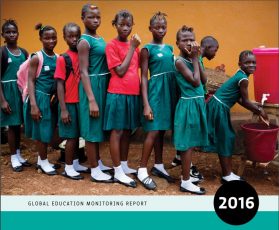
A report published by the United Nations Educational, Scientific and Cultural Organization (UNESCO) on 6 September 2016 revealed that not only did a majority of countries that agreed to the Millennium Development Goals (MDGs) in 2000 fail to meet their educational targets (MDG2), they are also on track to fall well short of the new Sustainable Development Goals (SDGs) established for 2030.
The UNESCO Global Education Monitoring Report (GEM Report) revealed that only 64 out of the 157 participating countries (40%) reached the MDG2 educational goal for every child to receive a primary school education by 2015. The 93 countries which failed to achieve this target include the poorest nations on the planet, including Rwanda, Niger and the Central African Republic (CAR). Other related issues were highlighted, including an imbalance of effort in relation to the provision of educational aid. Mongolia, for example, was spotlighted for having received 15 times more educational aid than Chad, which came despite Mongolia having successfully met its MDG2 goals targets while Chad did not.
The countries lagging furthest behind in meeting their MDG2 targets are almost exclusively in Africa and include Niger, South Sudan, Burkina Faso, Afghanistan, Mali, Chad, Burundi, Ethiopia, Madagascar, Senegal, CAR, Rwanda, Mozambique, Sudan, Guinea (Conakry), Sierra Leone, Benin, Cote d’Ivoire and Bhutan. Indeed, only two out of the 90 poorest countries in the world have successfully been able to provide comprehensive primary education for all of their citizens, with 11 countries forecast to not meet the target until the year 2100.
The GEM Report contained an introduction penned by Jeffrey Sachs, a globally recognised economist, professor and leader in development and currently a Special Adviser on SDGs to the UN Secretary-General. It included a stirring call for a global fund to be created for education similar to that used to coordinate funding and intervention to combat diseases such as malaria, tuberculosis and HIV.
One of the key conclusions of the GEM Report was that education is vital to meet the growing needs of food production and food distribution. According to the report, farmers who are able to complete a primary and secondary education will be better poised to make the types of critical decisions required to increase agricultural productivity. The report also linked education to earning a better income, with every additional year of schooling worldwide generating an average earnings increase of 9.7%.
The MDG2 goals have now been subsumed into SDG4, which calls for universal completion of upper (free) secondary education by 2030. At present, only 12 countries are forecast to reach this goal by 2030, including (South) Korea, Japan, Poland, Canada and Russia.