
Protracted conflict, the climate crisis, a rise in mental illness and online misinformation among biggest emerging threats to children
Add us as your preferred source on Google to see more of our content in Search.
 Add to Preferred Sources
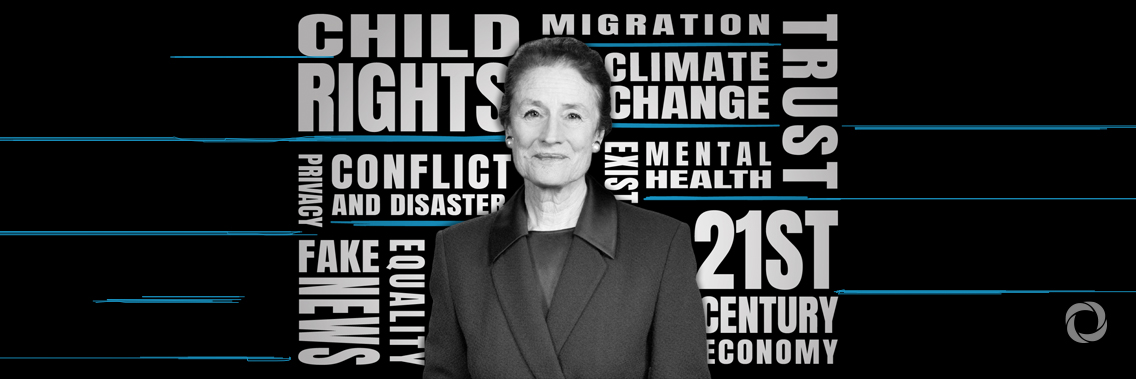
Protracted conflicts, the worsening climate crisis, a rising level of mental illness among young people, and online misinformation are some of the most concerning emerging global threats to children, UNICEF said in an open letter issued by the organization’s Executive Director Henrietta Fore.
In addition to existing threats to young people, such as access to education, poverty, inequality and discrimination, the inaugural letter warns of emerging threats to children’s rights and outlines a path to stepping up efforts to address them. The letter is being issued as part of UNICEF’s commemoration of the 30th anniversary of the Convention on the Rights of a Child – the world’s most widely ratified human rights treaty.
“And your generation, the children of today, are facing a new set of challenges and global shifts that were unimaginable to your parents,” writes Fore. “Our climate is changing beyond recognition. Inequality is deepening. Technology is transforming how we perceive the world. And more families are migrating than ever before. Childhood has changed, and we need to change our approaches along with it.”
The letter outlines eight growing challenges for the world’s children: prolonged conflicts; pollution and the climate crisis; a decline in mental health; mass migration and population movements; statelessness; future skills for future work; data rights and online privacy; and online misinformation.
On conflict, the letter notes that the number of countries experiencing conflict is the highest it has been since the adoption of the Child Rights Convention in 1989, with one in four children living in countries affected by violent fighting or disaster.
On climate change, the letter warns that children are already having to contend with rampant destruction to the planet and a global climate crisis that has the potential to undermine most of the gains made in child survival and development over the past 30 years. The rise in extreme weather patterns and toxic air, prolonged drought and flash floods are all part of this crisis, and are disproportionately affecting the poorest, most vulnerable children.
UNICEF is working to mitigate the impact of the climate crisis in countries across the world. For example, in Ethiopia, UNICEF has pioneered new technology to map groundwater and is developing solutions for chronically water-scarce communities. In Malawi, UNICEF has developed a long-lasting, eco-friendly system using solar power to improve access to clean water for communities. Yet more must be done to slow down climate change altogether.
“Governments and business must work hand in hand to reduce fossil fuel consumption, develop cleaner agricultural, industrial and transport systems and invest in scaling renewable energy sources,” writes Fore.
The letter also expresses concern that the majority of children will grow up as natives of a digital environment saturated with online misinformation. For example, so-called ‘deep fake’ technology uses artificial intelligence techniques to create convincing fakes of audio and video content, relatively easily.
The letter warns that online misinformation is already leaving children vulnerable to grooming, abuse, and other forms of exploitation; skewing democratic debate; and, in some communities, even prompting resurgence in deadly diseases due to distrust in vaccines fueled by online misinformation – the results of which could be the creation of an entire generation of citizens who do not trust anything.
“We can no longer rest on the naive assurance that truth has an innate upper hand against falsehood in the digital era, and so we must, as societies, build resilience against the daily deluge of falsity online,” writes Fore. “We should start by equipping young people with the ability to understand who and what they can trust online, so they can become active, engaged citizens.”
On mental health, the letter cautions that mental illness among adolescents has been on the rise in the years since the adoption of the CRC, and that depression is now among the leading causes of disability in the young.
Finally, the letter recognizes that children and young people have already created movements across the world in search of solutions to overcome the challenges they – and their peers – face, and calls for world leaders to follow their lead.
Original source: UNICEF
Published on 18 September 2019