
Add us as your preferred source on Google to see more of our content in Search.
 Add to Preferred Sources
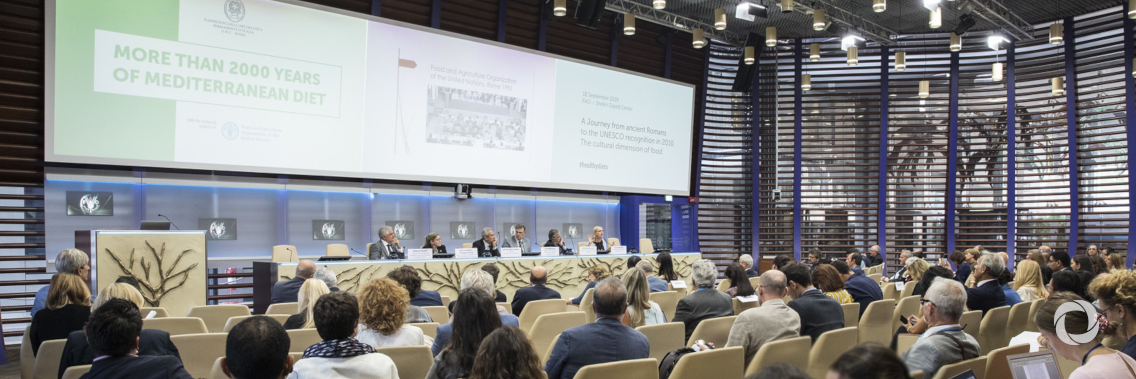
Access for all to healthy diets such as the Mediterranean diet is critical for achieving the Agenda 2030, and such diets must be protected and promoted. That was the main message at an event organized by the Government of Italy with support from FAO aimed at deepening understanding of the Mediterranean diet and raising awareness on how it can help achieve the Sustainable Development Goals.
The event – the first of a series of Mediterranean diet-related events – focuses on the origins, history, traditions and landscapes of the Mediterranean diet, and the principles on which it lies.
It brings together Mediterranean diet-related experts ranging from anthropologists to nutritionists and representatives of Italy’s Ministry of Foreign Affairs, UN agencies and academia.
The Mediterranean diet promotes local food production and consumption patterns. It encourages sustainable agriculture, safeguards landscapes and has a low environmental footprint, said FAO Director-General Qu Dongyu at the launch of the event at FAO’s headquarters.
Yet, cautioned the FAO chief, the Mediterranean diet, like many other traditional diets around the world, is being lost to modern eating habits – an increasing reliance on “easy eating” options provided by supermarkets and fast-food outlets.
Population growth, globalization, urbanization and economic pressures are all causing changes in our food systems, diets and consumption patterns. These lead, in turn, to unhealthy diets with worrying consequences on people’s health and lives, and countries’ economies.
This is why initiatives protecting and supporting traditional healthy diets, such as the Mediterranean diet, are to be commended and knowledge on these diets must be expanded, stressed the FAO Director-General.
With funding from the Italian Government, FAO and Italy have been working on enhancing the adherence to the Mediterranean Diet in Lebanon and Tunisia. The knowledge gained through this work will be transferred into policy interventions to promote the Mediterranean diet more broadly.
Original source: FAO
Published on 18 September 2019