
Add us as your preferred source on Google to see more of our content in Search.
 Add to Preferred Sources
Each year the International Day of Peace is observed around the world on 21 September. The General Assembly has declared this as a day devoted to strengthening the ideals of peace, both within and among all nations and peoples.
The United Nations Member States adopted the 17 Sustainable Development Goals in 2015 because they understood that it would not be possible to build a peaceful world if steps were not taken to achieve economic and social development for all people everywhere, and ensure that their rights were protected.
The Sustainable Goals cover a broad range of issues, including poverty, hunger, health, education, climate change, gender equality, water, sanitation, energy, environment and social justice.
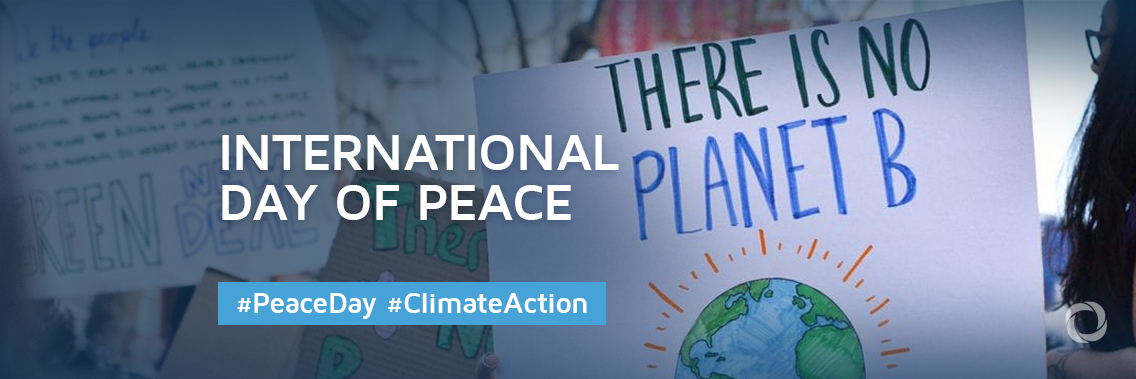
2019 Theme: “Climate Action for Peace”
The theme draws attention to the importance of combatting climate change as a way to protect and promote peace throughout the world.
“Today peace faces a new danger: the climate emergency, which threatens our security, our livelihoods and our lives. That is why it is the focus of this year’s International Day of Peace. And it’s why I am convening a Climate Action Summit,” said UN Secretary-General António Guterres.
Climate change causes clear threats to international peace and security. Natural disasters displace three times as many people as conflicts, forcing millions to leave their homes and seek safety elsewhere. The salinization of water and crops is endangering food security, and the impact on public health is escalating. The growing tensions over resources and mass movements of people are affecting every country on every continent.
Peace can only be achieved if concrete action is taken to combat climate change. Speaking to young Māoris and people of the Pacific islands in New Zealand in May, UN Secretary-General António Guterres said “nature does not negotiate” and emphasized four key measures that Governments should prioritize in order to reach carbon neutrality by 2050: tax pollution, not people; stop subsidizing fossil fuels; stop building new coal plants by 2020; focus on a green economy, not a grey economy.
On 23 September, the United Nations is convening a Climate Action Summit with concrete and realistic plans to accelerate action to implement the Paris Agreement. The Summit will focus on the heart of the problem – the sectors that create the most emissions and the areas where building resilience could make the biggest difference – as well as provide leaders and partners the opportunity to demonstrate real climate action and showcase their ambition.
Original source: United Nations
Published on 21 September 2019