
Add us as your preferred source on Google to see more of our content in Search.
 Add to Preferred Sources
The Asian Development Bank (ADB) has approved $63 million in additional financing for a project to improve flood management and river health in Nepal’s polluted Bagmati River Basin.
ADB approved the original project backed by $30 million in concessional and grant financing in October 2013 to support government and civil society initiatives to improve water management and river environment in the upper basin. The project has been supporting the creation of a river basin organization, improving the riverbank environment through various beautification and community schemes, constructing water storage facilities to increase water availability in the dry season, and setting up flood forecasting and early warning systems.
The additional funds will finance an additional 5.75 kilometers of riverbank beautification in the heart of Kathmandu city, construct a wastewater treatment plant integrated into the landscape to treat a polluted tributary flowing into the Bagmati River, construct and equip a new regional building for the river basin office, and provide funds for civil society organizations to train 18 communities along the river on flood early warning systems.
Civil society organizations established under the project for solid waste management and riverbank administration will be strengthened, and their activities extended to other stretches of the river. The beautification works in culturally significant river stretches will include the restoration of 24 heritage buildings that were damaged in the 2015 earthquakes.
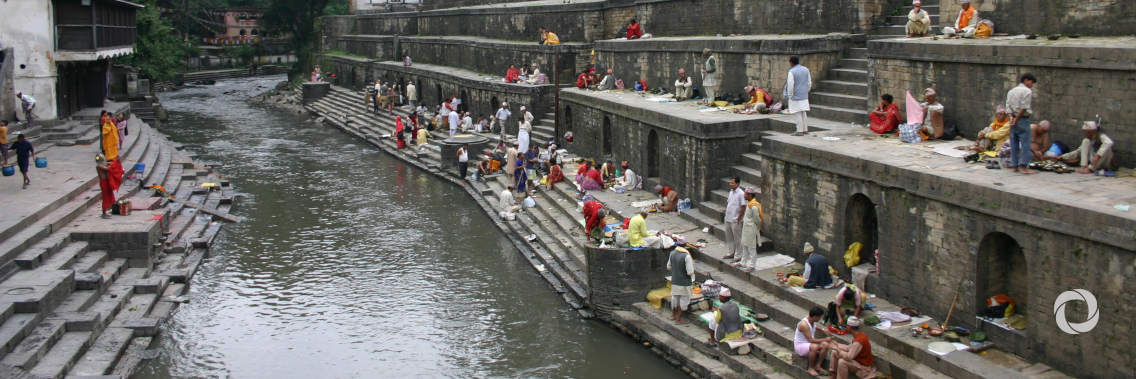
The Bagmati River Basin has important cultural and economic value for the people of Nepal, with the river considered holy and used for cultural and ritual ceremonies at many riverbank temples. It flows through Kathmandu Valley, the economic center of the country, and provides most of the capital’s drinking water in the upper basin.
In the absence of solid waste and wastewater management, the river has become an open sewer, with pollution made worse in the dry season when 80% of the river flow is withdrawn for drinking. The riverbanks are increasingly degraded by solid waste dumping and uncoordinated residential and industrial encroachment, creating a public health hazard.
The total cost of the project is now $114.8 million, including the additional and original financing and $21.8 million from the government of Nepal. The original project received about $500,000 in co-financing from the Multi-donor Trust Fund the Water Financing Partnership Facility.
Accompanying the project is a new technical assistance grant of $600,000 to support capacity building in the Bagmati River Basin water management institutions, focusing on installing information technology applications and flood forecasting.
Original source: ADB
Published on 23 September 2019