
Add us as your preferred source on Google to see more of our content in Search.
 Add to Preferred Sources
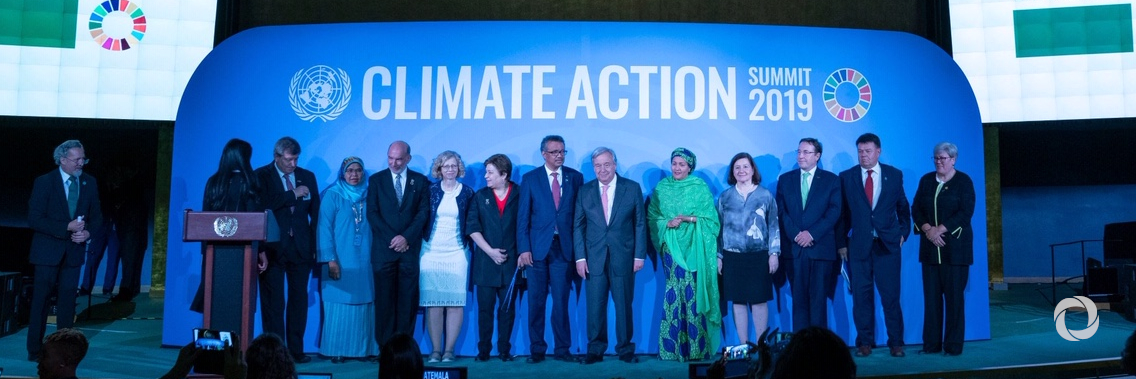
77 countries committed to cut greenhouse gas emissions to net-zero by 2050, while 70 countries announced they will either boost their national action plans by 2020 or have started the process of doing so, according to the summit organizers.
Over 100 business leaders delivered concrete actions to align with the Paris Agreement targets, and speed up the transition from the grey to a green economy, including asset-owners holding over $2 trillion in assets and leading companies with combined value also over $2 trillion.
UN Secretary-General António Guterres, in closing the Summit, said
“You have delivered a boost in momentum, cooperation and ambition. But we have a long way to go.” “We need more concrete plans, more ambition from more countries and more businesses. Nature is angry. And we fool ourselves if we think we can fool nature. Because nature always strikes back. And around the world, nature is striking back with fury,” said the UN Secretary-General.
Young climate activists, including Greta Thunberg, drove home the urgency of greater action, and their determination to hold government leaders to account.
A number of leaders committed their countries to carbon neutrality by 2050. The Russian Federation announced that it will ratify the Paris Agreement, bringing the total number of countries that have joined the Agreement to 187.
Action to boost resilience and early warnings
Financial commitments were also made to the Green Climate Fund, the official financial mechanism to assist developing countries in adaptation and mitigation practices to counter climate change. The Global Commission on Adaptation (GCA) also announced almost 1 billion US $ of new funding over the next 3 years to accelerate climate-resilient innovations and solutions in agriculture.
The need to strengthen early warning capacities that lead to early action was identified as a priority area of collective work in the lead-up to the summit by a coalition of countries co-led by the governments of Egypt and the United Kingdom.
A new partnership launched at the summit entitled Risk-informed Early Action Partnership (REAP) aims to help ensure the world’s poorest people receive earlier warnings of potential disasters. The partnership aims to invest USD 500 million in early warning system infrastructure and institutions to target early action by people in the most vulnerable areas. The UK Department for International Development (DFID) pledged £85 million at the summit to the new partnership. WMO is a convening partner.
Putting people at the center of efforts to build early warning systems will drive these efforts. It will scale-up WMO’s member’s engagement to provide impacts based warnings – these are warnings that don’t only predict the time of occurrence and intensity of a weather event but inform on what its impact will be and what actions to take. It will allow for scaling-up important WMO programmes on severe weather, flash flood and coastal inundation forecasting.
Original source: WMO
Published on 24 September 2019