
Add us as your preferred source on Google to see more of our content in Search.
 Add to Preferred Sources
Land and soil underpin life on our planet. The way we currently use these vital and finite resources in Europe is not sustainable. Human activities — growing cities and infrastructure networks, intensive agriculture, pollutants and greenhouse gases released to the environment — transform Europe’s landscapes and exert increasing pressure on land and soil.
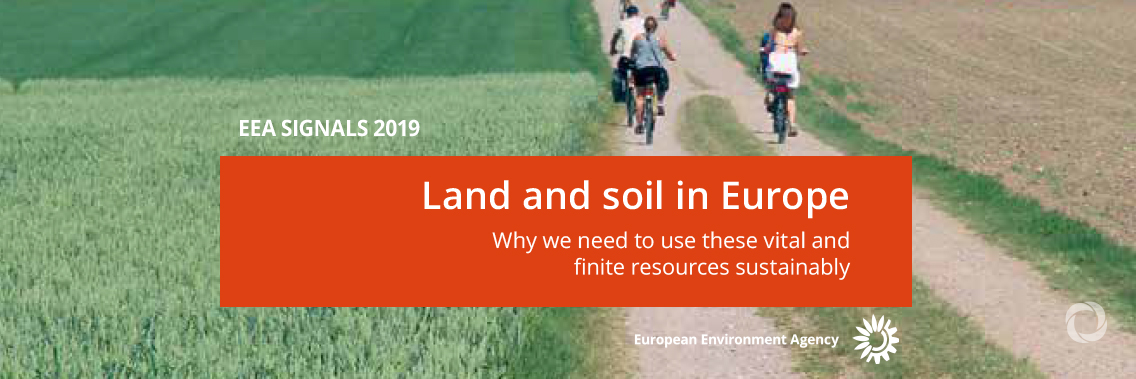
The European Environment Agency’s (EEA) Signals 2019, looks at a series of issues linked to land and soil, including links to climate change, agriculture, soil biodiversity, contamination and governance, and stresses why we need to manage them sustainably.
The report explains key pressures — such as urban sprawl, contamination, intensive use of agricultural land, landscape fragmentation — impacting Europe’s land and soil. Today, artificial surfaces (buildings, roads, urban facilities) cover less than 5 % of the wider EEA territory and continue to grow despite slowing down in recent years.
Almost three-quarters of Europeans live in urban areas and continued urban sprawl is often threatening productive land used for farming as well as forests and other areas home to wildlife and vital ecosystems.
We need to preserve and protect these key resources better. For example, the way we build and connect cities should prioritise ‘land recycling’, which consists of re-using and re-purposing existing urban areas such as old industrial sites and avoid new land to be covered by concrete and asphalt. Europe’s urban population is projected to grow by 30 million by 2050. Given these projections, compact cities with well-connected mobility options will need to play a key role to provide better quality of urban life with fewer impacts on the environment.
Similarly, pressure from economic activities, including agriculture, can adversely affect the health of land and soils. Plant protection products containing harmful chemicals can boost yields in the short-term but risk undermining soil productivity in the long-term. Europe’s agriculture sector relies on healthy soils, which can only be ensured through a comprehensive set of measures involving a combination of agricultural practices (e.g. precision farming, crop diversification, etc.), rural and agricultural communities (e.g. tackling land abandonment), as well as retailers and consumers (e.g. reducing food waste).
Healthy and resilient soil ecosystems are also essential to help mitigate and adapt to climate change. Europe’s soils and land store massive amounts of carbon. On the one hand, warmer temperatures can melt permafrost and release some of this carbon into the atmosphere, contributing to climate change. On the other hand, a sustainable use of our soils can help keep this carbon stored in the ground. Natural areas or soils not covered by artificial surfaces or compacted by heavy machinery can help absorb excess rain in case of intense precipitation or act as water storage in times of drought.
The report also addresses the need to protect land ecosystems better, and to ensure that natural areas, home to wildlife, are better connected to each other to enable species to move and migrate. This requires an extensive network of green infrastructure, connecting natural areas.
A healthy and sustainable use of our land and soil resources will help the Europe Union achieve many of its policy targets ranging from climate change mitigation to halting biodiversity loss, as well as Sustainable Development Goals.
Read and download the report: EEA Signals 2019 ‘Land and soil in Europe’.
Original source: European Environment Agency
Published on 30 September 2019