
Add us as your preferred source on Google to see more of our content in Search.
 Add to Preferred Sources
The World Bank approved a grant of $110 million as additional financing to support the Government of Mozambique’s reconstruction efforts in the aftermath of the Cyclones Idai and Kenneth.
This funding will address Mozambique’s post-disaster recovery needs in the roads subsector by increasing the scope of the original Integrated Feeder Road Development Project approved in 2018 through reconstruction and rehabilitation of rural roads and bridges in the four additional provinces of Sofala, Manica, Tete, and Cabo Delgado.
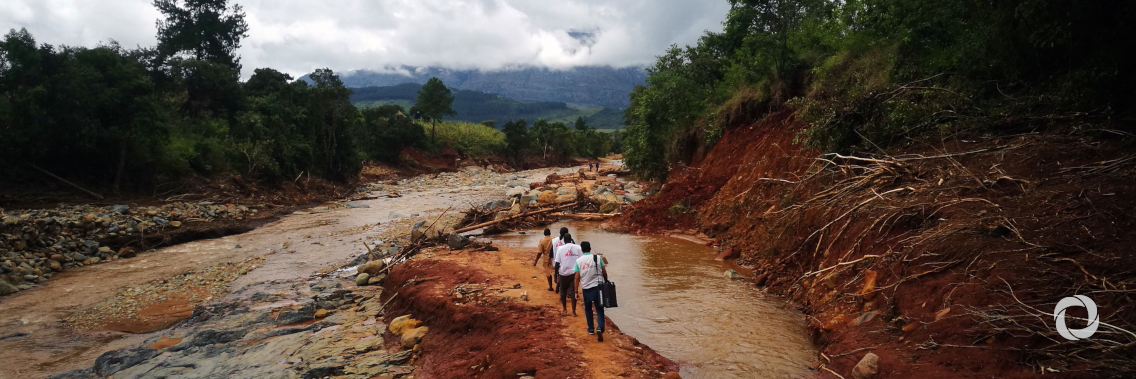
“The Cyclones Idai and Kenneth have destroyed a large portion of the road network in the six provinces, which has resulted in tremendous human suffering in rural communities,” noted Mark Lundell, World Bank Country Director for Mozambique, Madagascar, Mauritius, Seychelles and Comoros. “This project will help restore access to medical, educational and economic opportunities for the affected communities.”
For the poor, the rural roads are the only connection to essential medical services, schools, social facilities, and broader economic opportunities. Large communities were cut off for weeks. Collapsed bridges meant large detours and alternative routes, adding, in some cases, more than 50 km to commute. Damaged roads make emergency recovery and reconstruction efforts difficult in every other sector of the economy.
This additional financing is part of the World Bank’s broader regional package which comprises a set of operations totaling about $700 million in IDA resources to support cyclone response in Malawi, Mozambique, and Zimbabwe. This operation is consistent with the World Bank Group’s twin goals of ending extreme poverty and boosting shared prosperity through access to infrastructure, and it’s in line with the World Bank Country Partnership Framework 2017-2021.
Original source: World Bank
Published on 30 September 2019