
Add us as your preferred source on Google to see more of our content in Search.
 Add to Preferred Sources
Urban regeneration and sustainable tourism, a new collaboration on energy, climate change, and sustainable development and a global movement to help fight food waste. Here is what you missed from last week’s headlines in the international development sector:
EBRD moves to urban regeneration and sustainable tourism
Urban regeneration, green buildings and sustainable and inclusive tourism with links to the local economy are the priorities of the EBRD’s new strategy for the property and tourism sector, approved by the Bank’s Board of Directors.
In particular, the strategy will guide the Bank’s investments and policy work for the period 2020-24 with an emphasis on:
- managing and developing green and sustainable buildings;
- investing in an inclusive and competitive hospitality and tourism sector;
- promoting urban regeneration initiatives for more competitive, sustainable and greener cities;
- supporting the diversification of funding sources for real estate development and ownership through capital markets, thereby facilitating the sector’s resilience.
To date, the EBRD has invested over €3.3 billion in around 200 projects in the property and tourism sector.
Vlaho Kojakovic, EBRD Head of Property and Tourism, said after the approval on 2 October 2019:
“A vibrant property and tourism sector is crucial for functioning economies. We are proud that the new strategy supports economic growth and promotes social inclusion in the EBRD economies, aiming to respond to challenges such as urbanisation and climate change. Greener buildings, promoting inclusive tourism and supporting urban regeneration are at the heart of the strategy.”
IRENA and UNIDO strengthen collaboration on energy, climate change and sustainable development
The International Renewable Energy Agency (IRENA) and the United Nations Industrial Development Organization (UNIDO) are jointly scaling up efforts to support an energy transformation through the widespread adoption and sustainable use of renewable energy.
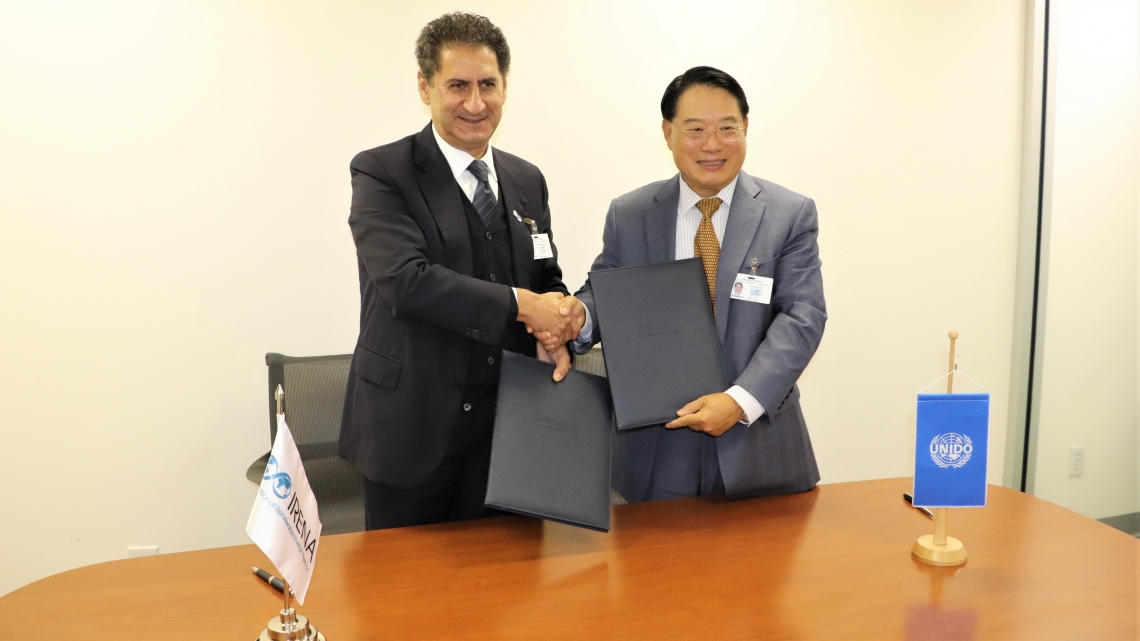
A joint declaration was signed by Mr. Li Yong, UNIDO’s Director General and Mr. Francesco La Camera, Director-General of IRENA, on the margins of the UN Secretary General’s Climate Action Summit currently taking place in New York. As part of the declaration, the two organizations confirmed their intent to work together on renewable energy, access to energy, rural electrification, climate change, and sustainable development in developing countries and emerging economies globally.
The United Nations World Food Programme launches a global movement to help fight food waste
As part of this campaign, WFP has enlisted top restaurateurs and celebrity chefs from around the globe to join the movement by making their own pledge to #StopTheWaste
While there is enough food in the world to feed everyone, one-third of the 4 billion metric tons of food we produce each year is lost or wasted, costing the global economy nearly US$1 trillion annually. At the same time, war and unrest are forcing more people to flee their homes than at any time since the Second World War, making it difficult for millions of people to grow their own food or buy it at an affordable price.
A recent report by the World Resources Institute confirmed that halving the rate of food loss and waste is an important strategy that would contribute to achieving the UN Sustainable Development Goals, meeting the goals of the Paris Agreement on climate change, and sustainably feeding the planet by 2050. WFP’s goal is a world with Zero Hunger. Part of achieving that goal is preventing food loss. WFP does this by helping smallholder farmers through the provision of new technologies for storage and transportation that prevent crops from spoiling prematurely and by connecting them with markets.
The partnership will look to develop a standardized national curriculum, workforce readiness programmes, and in-depth research to better inform and connect the private sector with future talent.
Here’s what else has happened
United Kingdom: A commitment has been made to prioritise ending preventable deaths of mothers, new-born babies and children in the developing world by 2030. To achieve this, UK aid will invest in more vaccines for deadly diseases, prioritise access to healthcare for women and girls around the world, and invest in research to diagnose and treat diseases more quickly and effectively.
WHO and UNICEF: UN agencies are working with the authorities in Sudan to protect more than one million people from cholera, an infectious disease that can kill within hours if left untreated. The World Health Organization (WHO) and the UN children’s fund, UNICEF, will support an oral cholera vaccination campaign aimed at covering 1.6 million people there and in neighboring Sinnar state.
Sweden: The European Investment Bank (EIB) has signed a SEK 3 billion financing facility agreement with Heimstaden Bostad AB. The Swedish residential company will develop eight residential properties in five cities in Sweden, resulting in about 3,300 new affordable homes to rent. The project is backed by the Juncker Plan’s European Fund for Strategic Investments (EFSI).
The investments will support the large-scale construction of affordable housing, thus addressing the severe shortage of residential units in Sweden’s main cities.
Reports
UNHCR urges more support to boost refugee access to tertiary education
Only three percent of refugees have access to higher education, according to UNHCR, the UN Refugee Agency. In its “Refugee Student Voices: Refugee Students In Higher Education” report, UNHCR is calling for critical support to scale up existing programs and to help secure futures.
“In recent years the level of forced displacement has increased. This represents a serious problem for children who account for half of the world’s refugee population. Without educational opportunities their chances of leading a productive life are severely constrained,” said Ewen Macleod, Director of UNHCR’s Division of Resilience and Solutions.
“Access to higher education can change lives. It creates opportunities for refugees that may not otherwise exist given their experience of conflict and displacement. It helps them shape their own futures, earn a living and to contribute fully to their community.”
While prospects for refugees to attain higher education are limited, substantial progress has been made to expand the current pool of opportunities.
Read and download the “Refugee Student Voices: Refugee Students In Higher Education”.
Countries urged to make ‘digital world’ safer for children
Rising Internet connectivity has the potential to transform children’s lives for the better, but also makes them vulnerable to sexual abuse, online harassment and bullying, recruitment by extremist groups, and other risks, according to a new UN-backed report.
The study by the Broadband Commission for Sustainable Development underlines the need for everyone to ensure children remain safe as they explore “the digital world”.
Read and download Child Online Safety: Minimizing the Risk of Violence, Abuse and Exploitation Online.
EU Budget Support – Trends and Results 2019
EU budget support is implemented in 89 countries or territories through 250 programmes, for a portfolio of EUR 10.6 billion and payments amounting to EUR 1.8 billion in 2018. EU budget support is provided when relevant and credible policies are in place and implemented effectively.
EU budget support helps the building of more transparent and accountable public administrations, able to deliver services to their citizens more effectively and efficiently. In situations of fragility, it strengthens states’ capacity to provide services to the population and fosters countries’ resilience.
Read and download the Budget Support – Trends and Results 2019
Events
2019 Annual Meetings of the Boards of Governors of the World Bank Group and the International Monetary Fund
Washington, D.C., USA
14 – 20 October 2019
At the heart of the Annual Meetings are the Annual Meetings plenary session, the joint World Bank Group/IMF Development Committee, and the IMF International Monetary and Financial Committee, where progress on the work of the institutions is discussed.
Green Growth and Sustainable Development Forum (GGSD) 2019
Paris, France
26-27 November 2019
The Forum will address how the shift to a circular and low-carbon economy, which is required to meet the Sustainable Development Goals (among others) on Responsible Consumption and Production (SDG 12) and on Climate Action (SDG 13), might impact on future demand and business models of extractive and heavy industries, such as oil & gas, mining, steel and cement, and its innovation and fiscal implications.
Global Vaccine Safety Summit
Geneva, Switzerland
2-3 December 2019
In the year that marks the 20th anniversary of the WHO’s Global Advisory Committee on Vaccine Safety (GACVS), the Global Vaccine Safety Summit will be an opportunity to take stock of GACVS accomplishments and look towards priorities for the next decade.
At the Summit, WHO will present the Global Vaccine Safety Blueprint 2.0 strategy 2021-2030 to key stakeholders and collect their input for the final version, due for publication in the new year.