
New challenges facing Europe’s waste water treatment plants present opportunities for improving sustainability
Add us as your preferred source on Google to see more of our content in Search.
 Add to Preferred Sources
More investment is needed to make urban wastewater treatment plants fit to meet the difficult challenges posed by the impacts of climate change, as well as the presence of antibiotics and other micro-pollutants in wastewater, according to a European Environment Agency (EEA) briefing.
Much has already been done in recent decades to improve wastewater treatment, according to the EEA briefing ‘urban wastewater treatment for 21st-century challenges’. The proportion of households connected to treatment facilities varies across Europe, from 97% in western and central Europe to around 70% in southern, south-eastern and eastern Europe. However, urban wastewater treatment now needs to address challenges like climate change, changes in population and newly emerging pollutants.
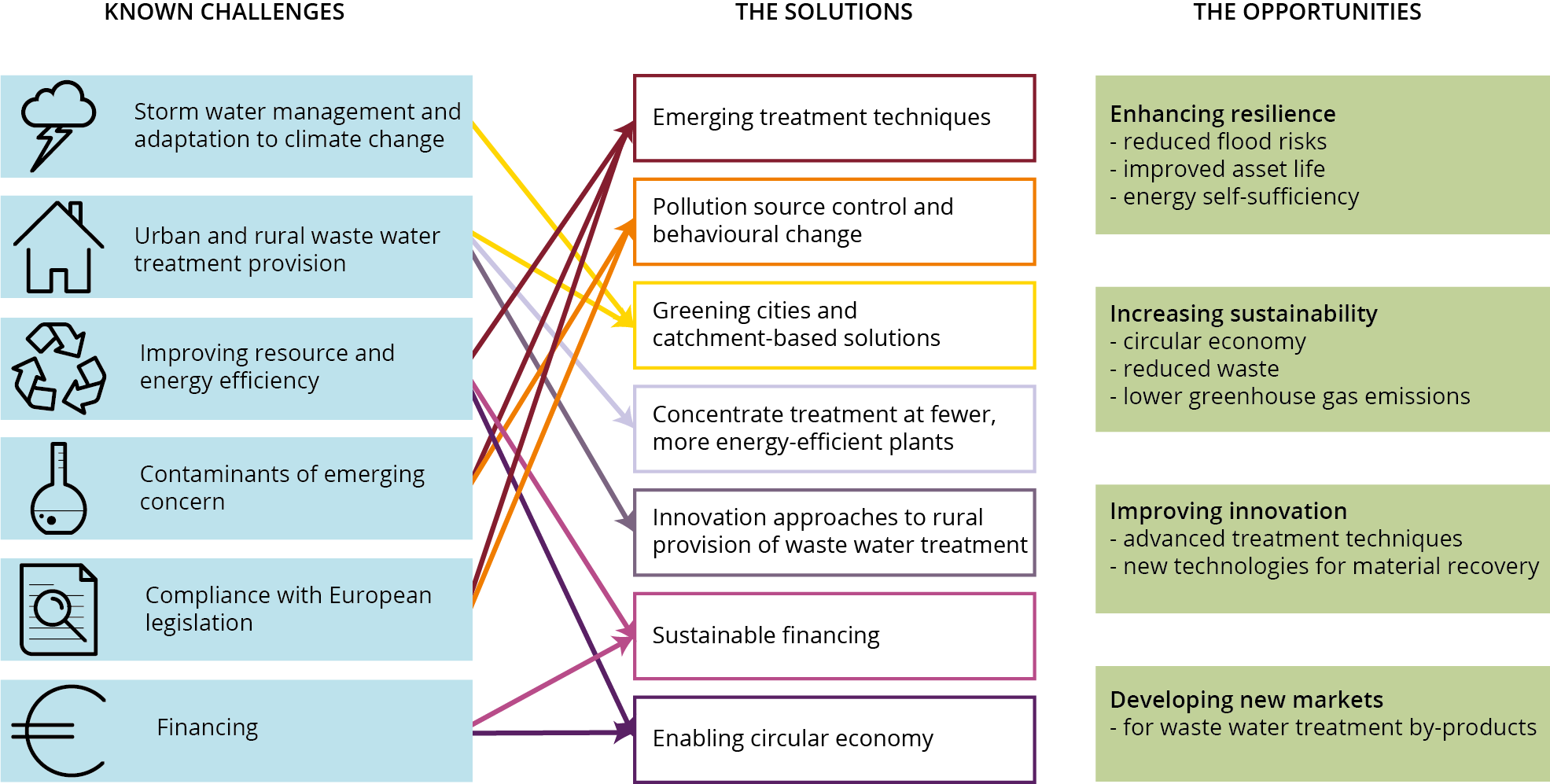
Extreme weather events linked to climate change are bringing heavier and more frequent rainfall in some areas, but water scarcity in others, affecting how well storm sewers and treatment plants operate. Excessive rainstorms can overwhelm and overload sewer systems and lead to overflows at treatment plants, while a lack of rainfall can lead to problems in the collection and treatment of sewage.
Such challenges are added to those routinely addressed by local authorities and water utilities, including financing construction, maintenance, operation and upgrades, as well as sourcing and retaining suitably skilled staff to deliver the necessary improvements in wastewater treatment.
The EEA briefing also notes that antibiotics and other excreted pharmaceuticals are increasingly being found in waste water. These chemicals are among those forming a cocktail mix of chemicals, which cannot be easily tackled by many treatment plants, as they require costly, more stringent and energy-intensive treatment techniques.
The briefing notes that energy costs and scarce resources are reasons to promote water efficiency. Furthermore, they provide an opportunity for treatment plants to contribute more to recycling and reusing water and recovering materials like phosphorus, which can be collected during the treatment cycle. The briefing cites some examples of investments already being taken across Europe to improve wastewater treatment resilience, with the use of retention ponds and rainfall reservoirs to manage water flows from flash floods, or in reusing water that has been treated and cleaned.
Original source: European Environment Agency
Published on 09 October 2019