
Add us as your preferred source on Google to see more of our content in Search.
 Add to Preferred Sources
Sustainable food policies, donors’ new pledge in the fight to end epidemics, UNICEF launches Cryptocurrency Fund and Green Agriculture for sustainable development. Here is what you missed from last week’s headlines in the international development sector:
14 cities commit to sustainable food policies that will address the global climate emergency
14 global cities committed to the C40 Good Food Cities Declaration, in order to promote and preserve the health of citizens and the health of the planet. Mayors will work with their citizens to achieve a ‘Planetary Health Diet’ for all by 2030, with balanced and nutritious food, reflective of the culture, geography, and demography of their citizens. Mayors will use their procurement powers to change what kind of food cities buy, and introduce policies that make healthy, delicious and low-carbon food affordable and accessible for all. They’ll also reduce food loss and wasted food.
The cities signing the C40 Good Food Cities Declaration are Barcelona, Copenhagen, Guadalajara, Lima, London, Los Angeles, Milan, Oslo, Paris, Quezon City, Seoul, Stockholm, Tokyo and Toronto. The pledge was made at the C40 World Mayors Summit in Copenhagen.
Under the C40 Good Food Cities Declaration, cities commit to:
- Align food procurement policies to the Planetary Health Diet ideally sourced from organic agriculture
- Support an overall increase of healthy plant-based food consumption in our cities by shifting away from unsustainable, unhealthy diets.
- Reduce food loss and waste by 50% from 2015 figures; and
- Work with citizens, businesses, public institutions and other organizations to develop a joint strategy for implementing these measures and achieving these goals inclusively and equitably, and incorporating this strategy into the city’s Climate Action Plan.
Global Fund donors pledge US$14 billion in fight to end epidemics
n an unprecedented show of global solidarity, donors at the Global Fund’s Sixth Replenishment Conference pledged US$14.02 billion for the next three years – the largest amount ever raised for a multilateral health organization, and the largest amount by the Global Fund. The funds will help save 16 million lives and end the epidemics of AIDS, tuberculosis and malaria by 2030.
President Emmanuel Macron of France electrified the conference with a stirring appeal to deliver the next generation a better and healthier world, fighting inequality and strengthening social justice. President Macron called on all partners to increase their commitments by at least 15% in order to reach the target of at least US$14 billion, and during the pledging session that followed, donors answered that urgent call to step up the fight – many making last-minute increases on top of their original pledges.
In a stunning final push to reach the US$14 billion target, President Macron joined Bill Gates to make increased commitments for the coming three-year period, announcing that they would each pledge an additional US$60 million on top of pledges announced earlier in the day. With just US$80 million to go, President Macron, Mr. Gates and Bono – pointing to the imperative of ending the epidemics by 2030 – committed to raise at least a further US$100 million during the replenishment period to achieve a total of over US$14 billion.
“Everyone in the room today felt the power of a global community coming together to say in one voice: ‘We will end these epidemics’,” said Peter Sands, Executive Director of the Global Fund. “We are tremendously grateful to President Macron for his incredible leadership over the past year. With the incredible support of partners and donors around the world, we succeeded in reaching over US$14 billion to help save 16 million lives.”
UNICEF launches Cryptocurrency Fund
UNICEF will now be able to receive, hold and disburse donations of cryptocurrencies ether and bitcoin, through its newly-established UNICEF Cryptocurrency Fund. In a first for United Nations organizations, UNICEF will use cryptocurrencies to fund open source technology benefiting children and young people around the world.
Under the structure of the UNICEF Cryptocurrency Fund, contributions will be held in their cryptocurrency of contribution and granted out in the same cryptocurrency.
“This is a new and exciting venture for UNICEF,” said Henrietta Fore, UNICEF Executive Director. “If digital economies and currencies have the potential to shape the lives of coming generations, it is important that we explore the opportunities they offer. That’s why the creation of our Cryptocurrency Fund is a significant and welcome step forward in humanitarian and development work.”
FAO chief highlights the key role of Green Agriculture for sustainable development
Green agriculture has a vast potential to transform the agricultural sector in a way that enables access for everyone to nutritious food and at the same time ensures conservation of crucial natural resources, FAO Director-General Qu Dongyu said.
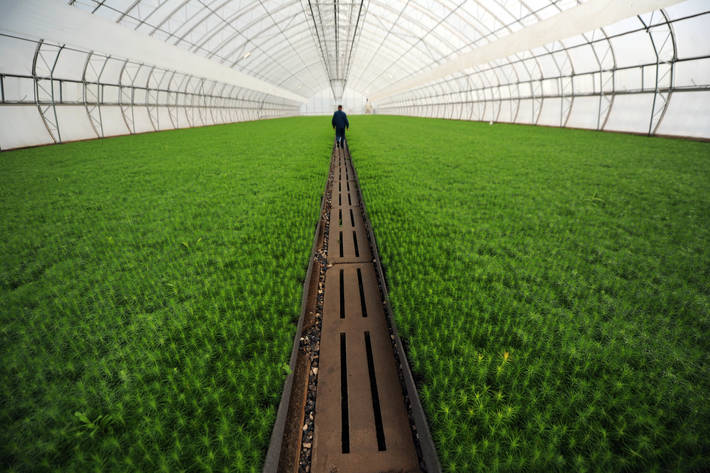
Qu delivered his remarks at the high-profile International Agro-Industrial Forum on the sidelines of the 21st “Golden Autumn – 2019” Exhibition in Moscow.
Referring to the need to speed up the transition from the traditional agricultural practices to green agriculture, he stressed the vital role of digitalization in this process.
Here’s what else has happened
Climate change: The Clean Development Mechanism (CDM) has passed two exciting milestones – its millionth cancellation on the UN carbon offset platform and its 2-billionth issuance, demonstrating ongoing demand for cooperative action on climate change.
EBRD and EU: Small businesses in Ukraine will benefit from new financing opportunities of up to €120 million under a financing programme organised by the EU, the EBRD and its partner banks.
Three local banks have already signed up for the programme at this stage Raiffeisen Bank Aval will receive the equivalent of €25 million, ProCredit Bank Ukraine the equivalent of €20 million and OTP Bank Ukraine the equivalent of US$ 25 million. More local financial institutions are expected to join the programme in the future.
Ebola: Efforts to eradicate the deadly Ebola epidemic in eastern Democratic Republic of the Congo (DRC) are proving successful but “now we have to kill the virus”, the UN health agency said.
In an update to journalists in Geneva, the medic leading the World Health Organization’s campaign against the highly contagious virus said that while he could not say that it was beaten, it had been largely driven away from towns into rural areas.
Mozambique: The European Commission is mobilising an additional €10 million in humanitarian assistance for the many still dealing with the consequences of the two unprecedented tropical cyclones that hit Mozambique in 2019.
“Tropical cyclones Idai and Kenneth left a trail of destruction that is still being felt by the most vulnerable in Mozambique. The EU is reinforcing humanitarian support to deliver emergency food aid and health care. We will also step up support for communities to be better prepared for future natural disasters. We are committed to support Mozambique for as long as it takes,” said Christos Stylianides, Commissioner for Humanitarian Aid and Crisis Management.
Reports
Small businesses and self-employed provide most jobs worldwide, new ILO report says
Self-employment, micro and small enterprises play a far more important role in providing jobs than previously believed, according to the new International Labour Organization (ILO) estimates.
Data gathered in 99 countries found that these so-called ‘small economic units’ together account for 70 percent of total employment, making them by far the most important drivers of employment.
Read and download Small matters: Global evidence on the contribution to employment by the self-employed, micro-enterprises and SMEs.
European Commission welcomes the positive assessment about how it has managed the EU budget
In its latest report about the management of the EU budget, the European Court of Auditors – the independent auditor of EU spending – confirmed that the Juncker Commission had significantly improved the way it administered the EU budget.
The auditors gave the EU annual accounts a clean bill of health for a 12th year in a row and a qualified opinion on the 2018 payments for a third consecutive year. This is a high assessment of the targeted efforts of the Juncker Commission to make sure that every euro from the EU budget is spent in line with the rules and generates added value for citizens.
Read and download the 2018 Annual Management and Performance Report.
WHO launches first World report on vision
More than 1 billion people worldwide are living with vision impairment because they do not get the care they need for conditions like short and farsightedness, glaucoma and cataract, according to the first World report on vision issued by the World Health Organization.
The report launched ahead of World Sight Day on 10 October, found that ageing populations, changing lifestyles and limited access to eye care, particularly in low- and middle-income countries, are among the main drivers of the rising numbers of people living with vision impairment.
Read and download the full World report on vision.
Events
Global Gender Summit 2019
Kigali, Rwanda
25 – 27 November 2019
The Global Gender Summit is organized by the African Development Bank with other multilateral development bank partners. The biennial event brings together leaders from government, development institutions, private sector, civil society and academia.
EU Clean Air Forum
Bratislava, Slovakia
28-29 November 2019
In November 2017 a first EU Clean Air Forum convened in Paris. This Forum concluded with a clear message: solutions to improve air quality further are within reach, but to tackle air pollution successfully, we need to work together across economic sectors, across decision-making levels, across policy areas and together with citizens.
7th International Wildland Fire Conference
Brazil, Campo Grande
28 October 2019 – 1 November 2019
The main objective of the International Wildland Fire Conference (IWFC) is an exchange of opportunities among professionals of all nationalities related to fire management and forest fire control.
The participants are managers, authorities, technicians, researchers, brigades and firefighter. Among the conference’s activities are the debate and dissemination of work on the impacts of fire on communities and ecosystems in various regions of the world.