
Add us as your preferred source on Google to see more of our content in Search.
 Add to Preferred Sources
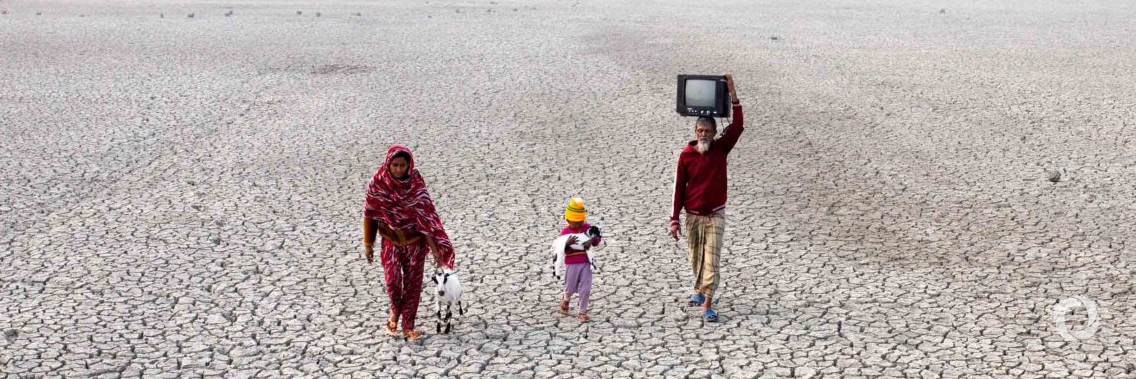
The once-mighty Lake Chad, a source of water and livelihoods for millions of people, has shrunk by 90 percent since the 1960s. Invasive plants cover half of what is left, making it harder for boats to gain access to the lake.
Because of climate change, population growth and unregulated irrigation, the surrounding area suffers from desertification, deforestation, and drought.
As a result, life for the communities around Lake Chad gets tougher every year. Violence in the region has driven millions of people from their homes in Chad, Cameroon, Nigeria and Niger. And the swelling population of the displaced must jostle for a meagre share of the area’s dwindling resources.
Of the 20.4 million refugees under UNHCR’s mandate at the end of 2018, a third were located in the world’s least developed countries, which are often highly vulnerable to the adverse effects of climate change, or which suffer from a scarcity of resources and infrastructure. The impact of natural disasters and the more gradual effects of climate change — such as the receding waters of Lake Chad, rising sea levels for coastal communities, longer and harsher droughts, or the creep of desertification — can create new displaced populations and pose challenges for existing ones.
With desertification threatening the area around Minawao refugee camp, in northern Cameroon, UNHCR, Land Life Company and the Lutheran World Foundation teamed up to restore over 100 hectares of land in the area.
Climate change and natural disasters can add to and worsen the threats that force people to flee across international borders. The interplay between climate, conflict, poverty and persecution greatly increases the complexity of refugee emergencies.
“Forced displacement across borders can stem from the interaction between climate change and disasters with conflict and violence, or it can arise from natural or man-made disasters alone. Either situation can trigger international protection needs,” said Filippo Grandi, UN High Commissioner for Refugees.
Forced displacement itself can be a source of tension and potential conflict if there is added competition for natural resources, land rights, food and water — problems amplified by the adverse effects of climate change. Such issues can worsen relations between refugees and their non-refugee neighbours, or even help to create new refugee emergencies by themselves.
“Climate factors drive people out of their homes but large-scale refugee movements — whether or not climate-induced — have themselves in turn an environmental impact, and refugees are frequently located in climate hotspots,” said Grandi. “At UNHCR, we have worked for years to reduce the environmental impact of refugee crises through renewable energy options, reforestation activities, and access to clean fuels and technology for cooking.”
UNHCR will continue to advocate for the empowerment of refugees and host communities through their full participation in the planning and implementation of energy programmes, knowledge transfer and capacity-building in technical and business skills, as well as support for bottom-up innovation, to create locally-appropriate interventions.
Original source: UNHCR
Published on 15 October 2019