
Cutting air pollution in Europe would prevent early deaths, improve productivity and curb climate change
Add us as your preferred source on Google to see more of our content in Search.
 Add to Preferred Sources
Europe’s air is getting cleaner but persistent pollution, especially in cities, still damages people’s health and the economy. The European Environment Agency’s (EEA) new analysis on air quality shows that exposure to air pollution caused about 400,000 premature deaths in the European Union (EU) in 2016.
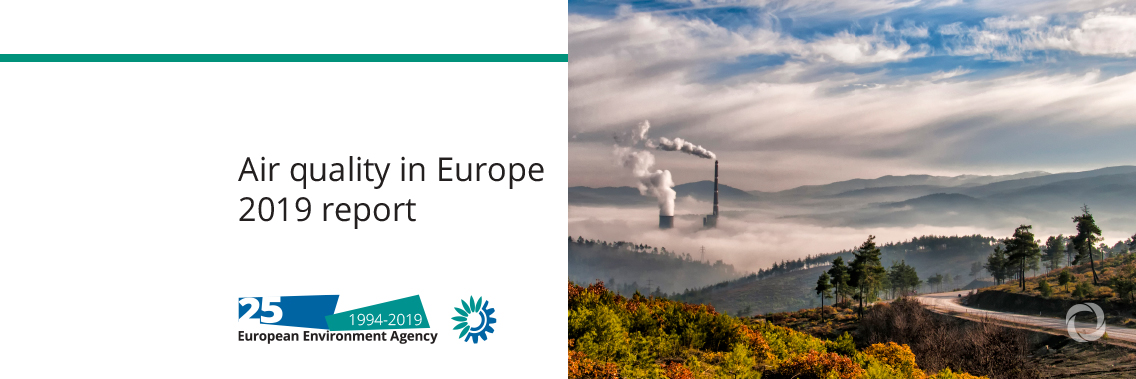
The EEA’s ‘Air quality in Europe — 2019 report’ shows that almost all Europeans living in cities are still exposed to air pollution levels that exceed the health-based air quality guidelines set by the World Health Organisation (WHO). The new EEA analysis is based on the latest official air quality data from more than 4 000 monitoring stations across Europe in 2017.
Poor air quality continues to damage Europeans’ health, especially in urban areas, with particulate matter (PM), nitrogen dioxide (NO2) and ground-level ozone (O3) causing the biggest harm.
As well as damaging health and reducing life expectancy, poor air quality also causes economic losses, for example, through higher health care costs, reduced yields from agriculture and forestry, and lower labour productivity.
Compared with the EU limit values, fine particulate matter concentrations were too high in seven EU Member States in 2017 (Bulgaria, Croatia, Czechia, Italy, Poland, Romania and Slovakia) In addition, four EU Member States, (Bulgaria, Hungary, Poland and Slovakia) have not yet met the EU’s 2015 target for the three-year average exposure for fine particulate matter.
“The European Environment Agency’s Air Quality in Europe report is an important and timely reminder that air pollution continues to impact most regions across the European Union, and affects the lives of most citizens. It is simply unacceptable that any of us should need to worry about whether the simple act of breathing is safe or not. We, therefore, need to work even harder to make sure our EU air quality standards are met everywhere,” said Karmenu Vella, EU Commissioner for Environment, Maritime Affairs and Fisheries.
Road transport, power plants, industry, agriculture and households are the main sources of air pollutants. These sources are closely linked to Europe’s core systems of production and consumption, and are also key drivers of greenhouse gas emissions and biodiversity loss.
The European Commission is organising the second EU Clean Air Forum, hosted by the Government of Slovakia in Bratislava, on 28–29 November 2019, to discuss the development and implementation of European, national and local air policies, projects and programmes. The 2019 Forum will focus on energy, agriculture, and clean air funding mechanisms
Read and download the EEA’s Air quality in Europe — 2019 report.
Original source: European Environment Agency
Published on 16 October 2019