
Add us as your preferred source on Google to see more of our content in Search.
 Add to Preferred Sources
Cutting air pollution in Europe, nature-friendly agricultural practices in Africa, the Caribbean and the Pacific and resilient and sustainable cities. Here is what you missed from last week’s headlines in the international development sector:
Cutting air pollution in Europe would prevent early deaths, improve productivity and curb climate change
The EEA’s ‘Air quality in Europe — 2019 report’ shows that almost all Europeans living in cities are still exposed to air pollution levels that exceed the health-based air quality guidelines set by the World Health Organisation (WHO). The new EEA analysis is based on the latest official air quality data from more than 4 000 monitoring stations across Europe in 2017.
Poor air quality continues to damage Europeans’ health, especially in urban areas, with particulate matter (PM), nitrogen dioxide (NO2) and ground-level ozone (O3) causing the biggest harm.
As well as damaging health and reducing life expectancy, poor air quality also causes economic losses, for example, through higher health care costs, reduced yields from agriculture and forestry, and lower labour productivity.
Compared with the EU limit values, fine particulate matter concentrations were too high in seven EU Member States in 2017 (Bulgaria, Croatia, Czechia, Italy, Poland, Romania and Slovakia) In addition, four EU Member States, (Bulgaria, Hungary, Poland and Slovakia) have not yet met the EU’s 2015 target for the three-year average exposure for fine particulate matter.
EU provides extra €9 million to support FAO’s work promoting nature-friendly agricultural practices in Africa, the Caribbean and the Pacific
European Commissioner for International Cooperation and Development, Neven Mimica, and Director-General of the UN Food and Agriculture Organization, Qu Dongyu, signed a new agreement which will see the EU provide an additional €9 million to support the UN agency’s work in Africa, the Caribbean and the Pacific.
In particular, the funding will boost the efforts of countries in the targeted regions to bring about sustainable changes in agricultural policies and practices to conserve and sustainably use biodiversity and natural resources. These efforts will assist these regions in tackling land degradation and desertification, and bolster food security and resilience to climate change.
Commissioner Mimica said: “Nature is under threat – the world needs more sustainable agricultural practices that boost food security, poverty reduction and economic growth, while preserving the planet’s precious natural resources. I am very glad to be announcing this additional funding just before World Food Day. It is a further example of the EU’s firm commitment to work with its ACP partner countries on these very aims.”
FAO Director-General Qu Dongyu stated: “Agriculture and biodiversity are strongly intertwined. The agricultural sector depends heavily on biodiversity, yet it is also a contributor to biodiversity loss. This new programme will help overcome the socio-economic and political barriers that prevent countries and farmers from adopting ecosystem-based agricultural practices and approaches to biodiversity and chemical management.”
Cities around the world want to be resilient and sustainable. But what does this mean?
In addition, rising global temperatures increase the risks of rising water levels, landslides, droughts, hurricanes, and other disasters. Without urgent action, these climate impacts could push an additional 100 million people into poverty by 2030, according to the World Bank.
The good news is that, armed with knowledge and creativity, urban centers are finding ways to tackle new and old problems alike, with fewer losses and greater recovery capacity – in other words, creating “resilience”.
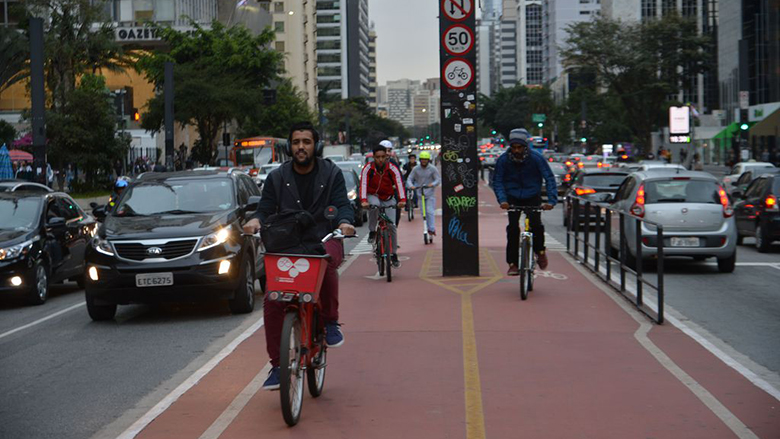
The Catalyzing Sustainable Urban Futures global conference held recently in São Paulo, Brazil, which was co-hosted by the São Paulo City Hall, the Sustainable Cities Program, and the World Bank’s Global Platform for Sustainable Cities (GPSC), with the support of the Global Environment Facility (GEF), looked closely at this topic of “resilience”.
Representatives from four continents examined three global issues, with sustainability and resilience as an ever-present backdrop. The first was climate change, a concern that mayors can no longer afford to sidestep. According to the World Bank, cities consume about 2/3 of the world’s energy and account for over 70% of global greenhouse gas emissions.
Here’s what else has happened
Burkina Faso: As of 15 October, some 486,000 people have been displaced, a steep increase from about 80,000 in January, making Burkina Faso one of the fastest-growing humanitarian crises in Africa this year. Hundreds of thousands of affected people are struggling to produce or have access to food. They also have limited access to water and medical services.
EIB Board: The Board of the European Investment Bank (EIB) agreed EUR 8.4 billion of new financing. This includes support for new investment across Europe and around the world to improve sustainable transport, clean energy, social housing, telecommunications and water infrastructure.
Action Against Hunger: Action Against Hunger, the world’s hunger specialist, announced Band Together, a global campaign to raise awareness about rising rates of deadly hunger. The campaign aims to empower parents around the world and scale up medical interventions to address this growing public health issue.
EU strategic agenda: The strategic agenda sets out the main priorities that will guide the EU’s work during the next institutional cycle. It will be used to plan the work of the European Council and will form the basis for the work programmes of the other EU institutions.
It focuses on four main priorities:
- protecting citizens and freedoms;
- developing a strong and vibrant economic base;
- building a climate-neutral, green, fair and social Europe;
- promoting European interests and values on the global stage.
Reports
7 million people receive record levels of lifesaving TB treatment but 3 million still miss out
More people received life-saving treatment for tuberculosis (TB) in 2018 than ever before, largely due to improved detection and diagnosis. Globally, 7 million people were diagnosed and treated for TB – up from 6.4 million in 2017 – enabling the world to meet one of the milestones towards the United Nations political declaration targets on TB.
WHO’s latest Global TB Report says that 2018 also saw a reduction in the number of TB deaths: 1.5 million people died from TB in 2018, down from 1.6 million in 2017. The number of new cases of TB has been declining steadily in recent years. However, the burden remains high among low-income and marginalized populations: around 10 million people developed TB in 2018.
Read and download the WHO’s latest Global TB Report.
New ILO research identifies policies to tackle poverty and inequality
Strategies to increase access to decent work and tackle poverty are significantly more effective when active labour market policies (ALMPs) are combined with income support, according to a new report by the International Labour Organization (ILO).
What’s more, the analysis found that while income support and ALMPs both had drawbacks when implemented in isolation, when combined “the beneficial effects tend to be unequivocal”.
The new report What works: Promoting pathways to decent work, looks at the role of ALMPs (such as training, career advice and start-up support) in emerging and developing economies, and how they can help people overcome labour market obstacles when combined with income support.
“Gainful employment remains the most reliable way of escaping poverty”, the report says, and people who receive this combined support have greater chances of finding a job and the employment they get is generally of better quality.
Read and download the report: What works: Promoting pathways to decent work.
European States urged to do more to protect and support child refugees and migrants
The European States must step up their efforts to protect child refugees and migrants who have endured not only difficult and dangerous journeys but continue to face risks and hardship once in Europe, including unsafe accommodation, being incorrectly registered as adults, and a lack of appropriate care, UNHCR, the UN Refugee Agency, has urged.
UNHCR’s latest Desperate Journeys report, notes that from January to September 2019, some 80,800 people arrived in Europe via Mediterranean routes – down from 102,700 in the same period of 2018. Of those who arrived, more than a quarter were children, many travelling without their parents.
“These children may have fled conflict, lost family members, been away from home for months, even years, with some enduring horrific abuses during their journeys, but their suffering doesn’t stop at the border,” said Pascale Moreau, Director of UNHCR’s Europe Bureau. “Across Europe, unaccompanied children in particular are frequently housed in large centres with minimal oversight, exposing them to further abuse, violence and psychological distress and increasing the risk that they will move on or disappear.”
Read and download the report: Desperate Journeys
Events
CABEI-Korea Week 2019
Seoul, Korea
21-22 October 2019
The event introduces the incorporation of the Republic of Korea as the 15th and newest member country of CABEI, enhancing productivity, competitiveness and bridging the infrastructure gap in the Central American region’s economy.
11th UNESCO Youth Forum – Youth Spaces in Action!
Paris, France
18-19 November 2019
The 11th UNESCO Youth Forum – Youth Spaces in Action will take place at UNESCO Headquarters in Paris, France during the 40th session of UNESCO’s General Conference.
This Forum will encourage dialogue, experience- and knowledge-sharing, peer learning and cooperation among young change-makers and youth representatives, with UNESCO and its Members States, and with other stakeholders.
Geneva Peace Week 2019 (GPW19)
Geneva, Switzerland
4-8 November 2019
Geneva Peace Week is a collective initiative facilitated by the United Nations Office at Geneva, the Graduate Institute for International and Development Studies, and the Geneva Peacebuilding Platform in collaboration with the Swiss Confederation.