
Add us as your preferred source on Google to see more of our content in Search.
 Add to Preferred Sources
Parliaments are being called upon to take all legal and policy measures to achieve universal health coverage (UHC) by 2030, following a resolution adopted by the 141st Assembly of the Inter-Parliamentary Union (IPU) in Belgrade, Serbia.
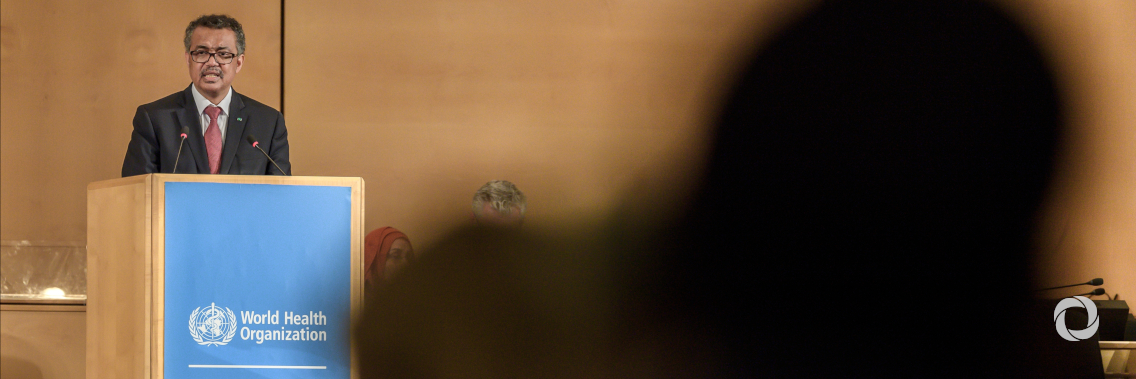
“Universal health coverage is a political choice. Last month, the world’s leaders signalled their readiness to make that choice. Now, it’s time to turn those commitments into health results,” said WHO Director-General Dr. Tedros Adhanom Ghebreyesus, welcoming the resolution’s adoption by parliamentarians from around the world.
The resolution, which seeks to accelerate progress for UHC for up to 5 billion people currently estimated to lack access to essential health services, comes just 1 month after heads of state agreed a high-level United Nations political declaration on UHC in New York, United States of America.
Dr. Tedros focused on the importance of this resolution in achieving UHC: “Parliamentarians have a vital role to play in making this happen. Because it’s parliamentarians who pass laws and allocate funding. It’s parliaments who keep the government accountable for the commitments it’s made and who forge the partnerships that help countries make universal health coverage a reality.”
Like the United Nations declaration, the resolution highlights the importance of assuring strong primary health care – the provision of essential health services at the community level – and strengthening health systems.
It also emphasizes the role that strong health systems and services can play in assuring global health security. Only when the most vulnerable groups obtain health care can a country protect its people and prevent outbreaks from turning into epidemics.
The resolution includes a strong focus on the health of women, children and adolescents, including sexual and reproductive health, as a key component of UHC. It ends with a request to WHO to work with the IPU and other partners to support the implementation of the resolution at global, regional and country levels and to monitor progress.
Original source: WHO
Published on 23 October 2019