
Add us as your preferred source on Google to see more of our content in Search.
 Add to Preferred Sources
Once considered a costly alternative to onshore wind power, and largely limited to Europe and China, offshore wind is starting to show promise as a clean, cost-competitive choice for electricity generation in developing countries, thanks to rapid improvements in technology and a steady reduction in costs.
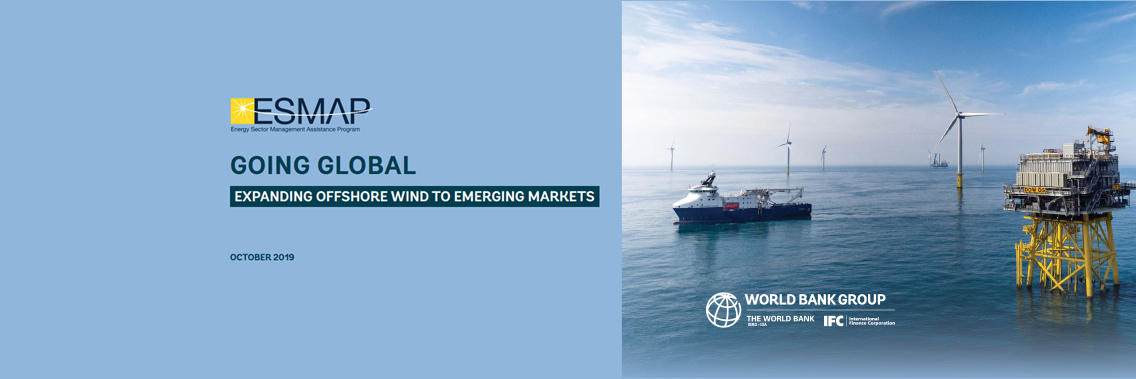
In fact, the technical potential for offshore wind in Brazil, India, Morocco, the Philippines, South Africa, Sri Lanka, Turkey and Vietnam is about 3.1 terawatts – well above their current installed power generation capacity and about three times the installed electricity generation capacity of all 28 EU countries – according to a new World Bank Group report, “Going Global: Expanding Offshore Wind in Emerging Markets.”
Highlighting the challenges and opportunities for offshore wind markets in these countries, the report also assesses the technical potential, proximity to demand centers, relevant policies and energy targets, and how they fit within current and future regional offshore wind markets.
The report follows the establishment of a new World Bank Group program that aims to fast-track the expansion of offshore wind power in developing countries and provide technical assistance to these countries, so they can assess their offshore wind potential and develop a pipeline of projects that are investment-ready.
Offshore wind is a substantial, renewable source of energy for developing countries seeking alternatives to fossil fuels for their energy mix and to implement environmentally sustainable energy access solutions. The industry has grown nearly five-fold since 2011, with 23 gigawatts installed at the end of 2018. A large volume of planned projects are in Europe, China and the United States – but there is significant potential in emerging markets as well, the report shows.
Offshore wind now represents about $26 billion in annual investments – or 8 percent of new global investments in clean energy. This proportion is set to increase dramatically, with an estimated $700 billion in investments for 190 GW in installed capacity by 2030.
For countries like Vietnam, which currently has an installed capacity of just over 40 GW – less than 10% of its 475 gigawatts (GW) of technical potential for fixed and floating offshore wind energy – this signals a significant opportunity for cost-competitive, large-scale offshore wind projects located close to areas of high energy demand.
With further analysis and careful consideration and planning, it is possible for developing countries to harness the power of the wind to reach their clean energy and climate goals.
Read and download the report: Going Global: Expanding Offshore Wind in Emerging Markets.
Original source: World Bank
Published on 31 October 2019