
Add us as your preferred source on Google to see more of our content in Search.
 Add to Preferred Sources
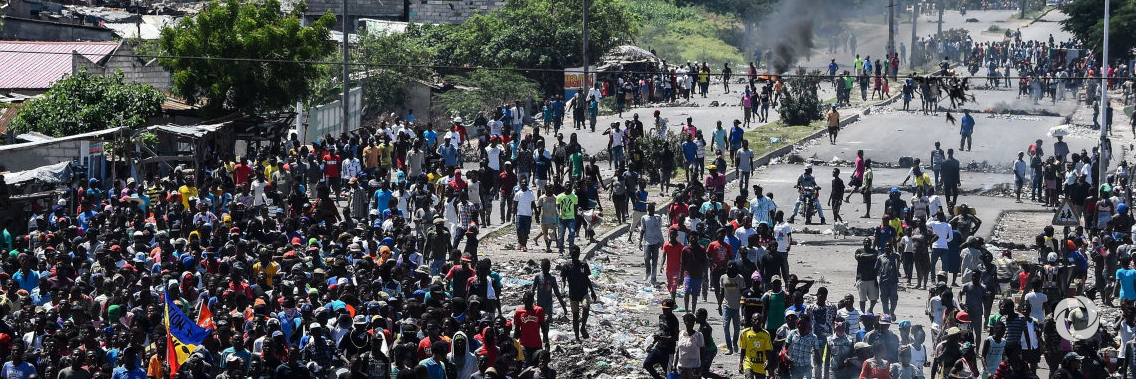
Expressing deep concern for the impact on human rights of ongoing political unrest in Haiti, the UN rights chief called on all actors to acknowledge the grievances of Haitians, many of whom have been demanding the president step down amidst violent demonstrations which ignited a sprawling emergency in recent weeks.
Haitians have taken to the streets repeatedly in the past 16 months, to protest corruption, inequality and economic hardship. Since the latest demonstrations began on 15 September, sweeping the streets of the capital, Port-au-prince, 42 people have died, and 86 have been injured in escalated tensions, Michelle Bachelet, High Commissioner for Human Rights said, in a statement from her Office (OHCHR).
“We are deeply concerned about the protracted crisis in Haiti, and its impact on the ability of Haitians to access their basic rights to healthcare, food, education and other needs” said Ms. Bachelet.
The political and humanitarian crisis stems from the struggle between President Jovenel Moïse and a surging opposition movement, which coupled with economic struggle and corruption have led to soaring prices of basic goods, crumbling healthcare facilities, and pushed the country to the brink of collapse.
According to news reports, President Moïse has said he has no intention of leaving office.
Children are missing school, while road blockades and violence have kept people from accessing sufficient food, drinking water, medicine and fuel, and the health sector has been hit particularly hard, with shortage of electricity, fuel, supplies and the inability of many medical personnel to reach their places of work.
After 15 years, the UN’s peacekeeping operations came to a close earlier this month. However, Secretary-General António Guterres promised “continuous commitment” through the new UN Integrated Office in Haiti (BINHUH).
The Office, which began operations on 16 October, serves in an advisory capacity, supporting Haitian authorities in and effort to bring about lasting peace and stability, as well as the benefits of the globally-agreed 2030 Sustainable Development Agenda.
Original source: UN News
Published on 01 November 2019