
Add us as your preferred source on Google to see more of our content in Search.
 Add to Preferred Sources
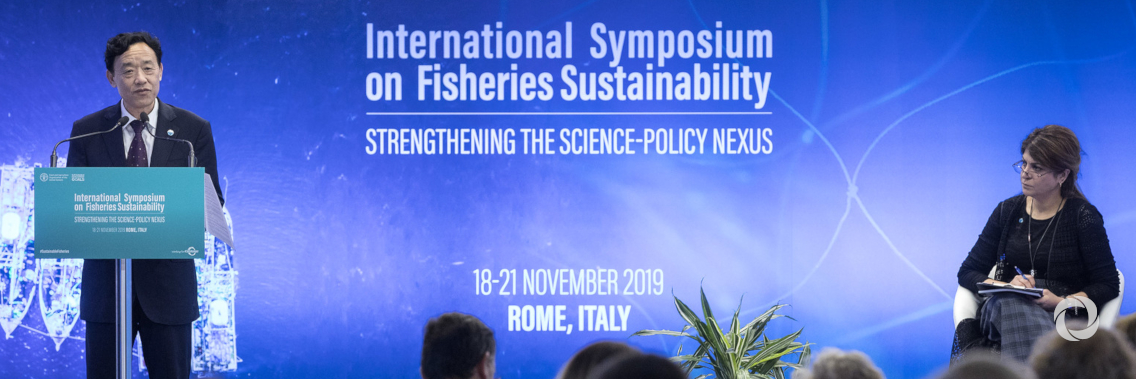
Fisheries are facing an important crossroad and the world needs a new vision for fisheries in the 21st century. This was FAO-Director General Qu Dongyu’s main message at the opening of the UN agency’s International Symposium on Fisheries Sustainability.
With the world’s population to rise to nearly 10 billion by 2050, land alone will not feed us – we also need aquatic food production. But we need to do so without compromising the health of oceans and rivers, and while improving the social conditions of those dependent on fisheries – often the poorest in society, stressed the FAO Director-General.
Millions of people worldwide depend on fish for food and for their livelihoods. A person gets 20.3 kilograms (average per capita figure) of top-quality protein and essential micronutrients from fish every year. Globally, over one in ten people depend on fishing to make a living and feed their families.
But the state of the oceans is of grave concern due to plastic pollution, the impacts of climate change, habitat degradation and overfishing. One in every three marine fish stocks is overfished – compared to just one in ten some 40 years ago – whilst the growing demand for freshwater fish is affecting the sustainability of inland fisheries.
FAO has noted a dangerous trend – fisheries in developed regions are increasingly sustainable, rebuilding stocks and improving the conditions of those working in the sector, but fisheries in developing regions are not improving as fast.
“This is creating a dangerous sustainability divide. We need to reverse this trend if we are to achieve the Sustainable Development Goals,” said the FAO chief.
The FAO Director-General put forward three solutions to make fisheries more sustainable:
- First, re-investing in marine and freshwater sustainability programmes.
- Second, investing in sustainable ocean growth. FAO’s Blue Growth Initiative, for example, is based on balancing ecological, social and economic principles. Developing industries like aquaculture is a win-win for a planet in need.
- And third, ensuring that adequate protection measures are combined with effective management, including better addressing food waste in the fisheries industry.
“We need more political will and more resources to make this happen. Let us not leave any region of the ocean behind in our sustainability quest. If we focus our science, our innovation spirit, our technologies, we will secure and protect one of the oldest and most undervalued food industries. We need to aim big and do concrete things!” concluded the FAO chief.
The symposium brings together the best in the fisheries sector to explore the status of global and regional fisheries, and how to make fisheries’ resources more sustainable, covering topics such as: fisheries management in the face of changing climate, the use of emerging technologies, and value chain improvements.
Original source: FAO
Published on 18 November 2019