
Add us as your preferred source on Google to see more of our content in Search.
 Add to Preferred Sources
Global leaders convened at the Reaching the Last Mile (RLM) Forum in Abu Dhabi to affirm their commitment to eradicate polio and pledge US$2.6 billion as part of the first phase of the funding needed to implement the Global Polio Eradication Initiative’s Polio Endgame Strategy 2019-2023.
This pledging event comes on the heels of a major announcement last month that the world has eradicated two of the three wild poliovirus strains, leaving only wild poliovirus type 1 (WPV1) still in circulation. Additionally, Nigeria – the last country in Africa to have cases of wild polio – has not seen wild polio since 2016 and the entire WHO African region could be certified wild polio-free in 2020. Thanks to the dedicated efforts of health workers, governments, donors and partners, wild polio only circulates in two countries: Pakistan and Afghanistan.
“From supporting one of the world’s largest health workforces to reaching every last child with vaccines, the Global Polio Eradication Initiative is not only moving us closer to a polio-free world, it’s also building essential health infrastructure to address a range of other health needs,” said Dr Tedros Adhanom Ghebreyesus, Director-General of the World Health Organization and Chair of the Polio Oversight Board. “We are grateful for the generous pledges made today and thank governments, donors and partners for standing with us. In particular, I would like to thank His Highness Sheikh Mohamed bin Zayed Al Nahyan, Crown Prince of Abu Dhabi for hosting the GPEI pledging moment and for his long-term support for polio eradication.”
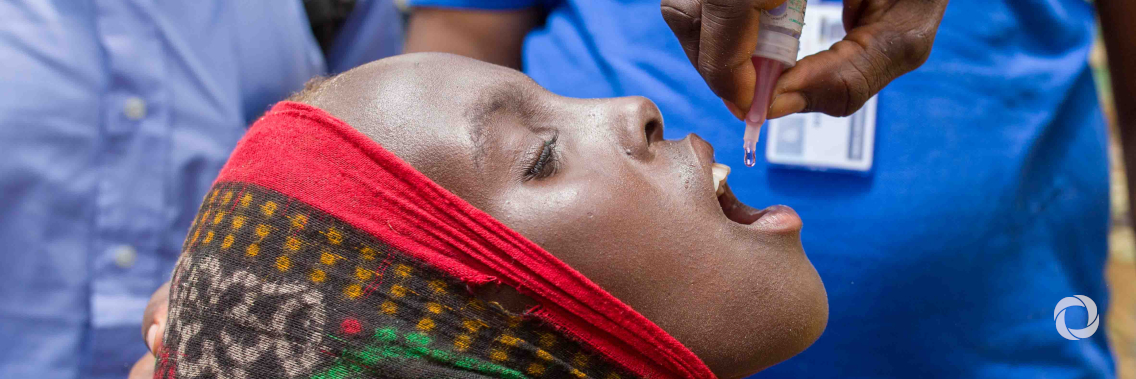
The commitments announced come at a critical time for the polio eradication effort. Barriers to reaching every child – including inconsistent campaign quality, insecurity, conflict, massive mobile populations, and, in some instances, parental refusal to the vaccine – have led to ongoing transmission of the wild poliovirus in Pakistan and Afghanistan. Further, low immunity to the virus in parts of Africa and Asia where not all children are vaccinated has sparked outbreaks of a rare form of the virus. To surmount these obstacles and protect 450 million children from polio every year, governments and donors announced significant new financial commitments toward the $3.27 billion needed to support the Polio Endgame Strategy.
In addition to overcoming barriers to reach every child, this funding will ensure the resources and infrastructure built by the GPEI can support other health needs today and in the future. Polio workers deliver Vitamin A supplements, provide other vaccines like those for measles and yellow fever, counsel new mothers on breastfeeding, and strengthen disease surveillance systems to anticipate and respond to outbreaks. As part of its commitment to advance gender equality and women’s empowerment, the GPEI is also working to ensure equal participation of women at all levels of the programme.
The future of polio eradication hinges on support and engagement at all levels of the programme – from individuals to communities to local and national governments to donors. If the strategies needed to reach and vaccinate children are fully implemented and funded, we are confident that we can deliver a world where no child lives in fear of polio.
Original source: WHO
Published on 19 November 2019