
Add us as your preferred source on Google to see more of our content in Search.
 Add to Preferred Sources
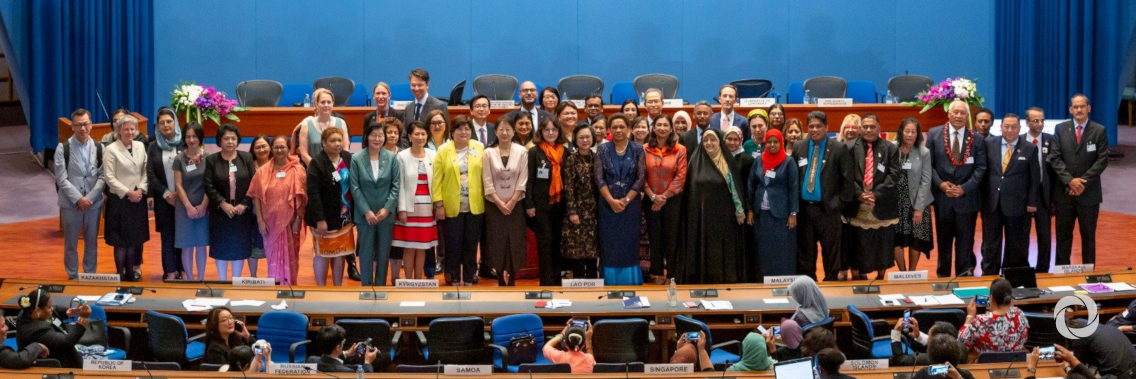
Over 500 Ministers, senior policymakers, UN officials, civil society, youth and private sector representatives from across Asia and the Pacific region gathered in Bangkok to chart out priority actions to support accelerated progress on gender equality and women’s empowerment.
The three-day Asia-Pacific Ministerial Conference on the Beijing+25 Review, organized by the United Nations Economic and Social Commission for Asia and the Pacific (ESCAP) and UN Women Regional Office for Asia and the Pacific, will provide a platform for countries to explore policy options and innovative strategies, towards addressing barriers to gender equality and realizing women’s rights for an equal future.
2020 will mark 25 years since the adoption of the Beijing Platform for Action, a milestone global agreement for advancing gender equality. While the Asia-Pacific region has made remarkable progress in areas such as closing the gender gap in primary education and halving maternal mortality rates, progress remains slow and uneven in other areas. Persisting gender norms and stereotypes, as well as limited investments in addressing gender equality, are among critical bottlenecks.
“When guaranteed equal opportunity, choice, and access to resources, women’s full participation multiplies the capacity of society as a whole. Gender equality and women’s empowerment are fundamental to the progressive realization of human rights. They are pre-conditions for successfully achieving the 2030 Agenda for Sustainable Development,” said United Nations Under-Secretary-General and Executive Secretary of ESCAP Armida Alisjahbana at the opening session.
Based on an analytical review conducted by ESCAP and UN Women in 2019, governments identified three priority areas for action in the coming years: eliminating violence against women and girls, improving the political participation of women and promoting women’s economic empowerment. Despite the adoption of laws and policies in these areas, countries underscored the need to shift focus towards their effective and just implementation.
The slow rate of progress is also particularly visible in the area of leadership and decision-making. Women only comprise one in five parliamentarians and just 12 percent of ministerial positions. On the sidelines of the conference, ESCAP and UN agencies will also launch a report titled Pathways to Influence: Promoting the Role of Women’s Transformative Leadership to Achieve the SDGs in Asia and the Pacific. The report highlights the journeys of 17 women leaders who have inspired change in their diverse areas and proposes key pathways to ensure a greater presence of transformative women leaders in the region.
The Conference is expected to conclude with a declaration to realize women’s rights for an equal future, which will also serve as the regional input to the 64th session of the Commission on the Status of Women on the global review of the implementation of the Beijing Declaration and Platform for Action next year.
Original source: ESCAP
Published on 27 November 2019