
Add us as your preferred source on Google to see more of our content in Search.
 Add to Preferred Sources
Filippo Grandi bears witness to conditions at the Moria centre on Lesvos and calls on European states to help Greece address situation.
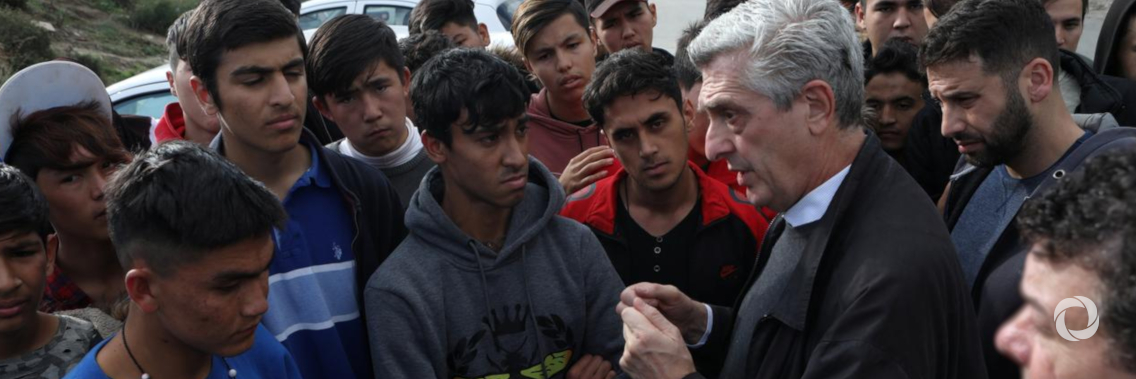
Conditions are unacceptable, UN High Commissioner for Refugees Filippo Grandi said during a visit to the site.
“What we are seeing here on Lesvos is very worrying,” said Grandi, who was on the island as part of a three-day visit to Greece. “We are in Europe. We cannot accept that people in distress live in such horrifying conditions.”
The situation in Moria has deteriorated sharply since Grandi’s last visit in 2016, mainly due to overcrowding. Some 30,000 asylum-seekers now live in five reception centres on Aegean islands designed for just 5,400.
Against this backdrop, Grandi welcomed Greek government measures to alleviate the situation, including a pledge to transfer 20,000 people to better conditions on the mainland.
“We are encouraged that they will focus on important aspects of the situation: better accommodation, transfer to the mainland, faster processes to determine the legal status and the future of these people,” he said.
Grandi also praised the Greek population for receiving and hosting asylum-seekers. This year Greece received more asylum-seekers than Italy, Spain, Malta and Cyprus combined. Most were families from Afghanistan, Syria and Iraq.
In Athens, Grandi held talks with Prime Minister Kyriakos Mitsotakis and government representatives to discuss practical and principled actions in addressing the urgent challenges Greece is facing, as well as long-term solutions in supporting refugees to become self-reliant and integrate.
The High Commissioner stressed the key themes of integration and responsibility-sharing with a group of mayors who have opened their cities to refugees in a meeting hosted by Athens Mayor Kostas Bakoyannis.
Original source: UNHCR
Published on 28 November 2019