
At COP 25, corporate climate movement grows as new companies announce plans to align with a 1.5°C future
Add us as your preferred source on Google to see more of our content in Search.
 Add to Preferred Sources
177 companies have pledged to set highly ambitious emissions reduction targets to help limit the worst effects of climate change — more than doubling in size since the first group of early movers was announced at the UN Climate Action Summit in September.
As part of the “Business Ambition for 1.5°C — Our Only Future” campaign, new signatories have pledged to set climate targets that align with limiting global temperature rise to 1.5°C above pre-industrial levels and reaching net-zero emissions by no later than 2050.
The 177 companies collectively represent over 5.8 million employees, spanning 36 sectors and with headquarters in 36 countries. The companies have a combined market capitalization of over US$2.8 trillion and represent annual direct emissions equivalent to the annual total CO2 emissions of France.
The companies are committed to setting science-based targets through the Science Based Targets initiative (SBTi), which independently assesses corporate emissions reduction targets in line with what climate scientists say is needed to meet the goals of the Paris Agreement.
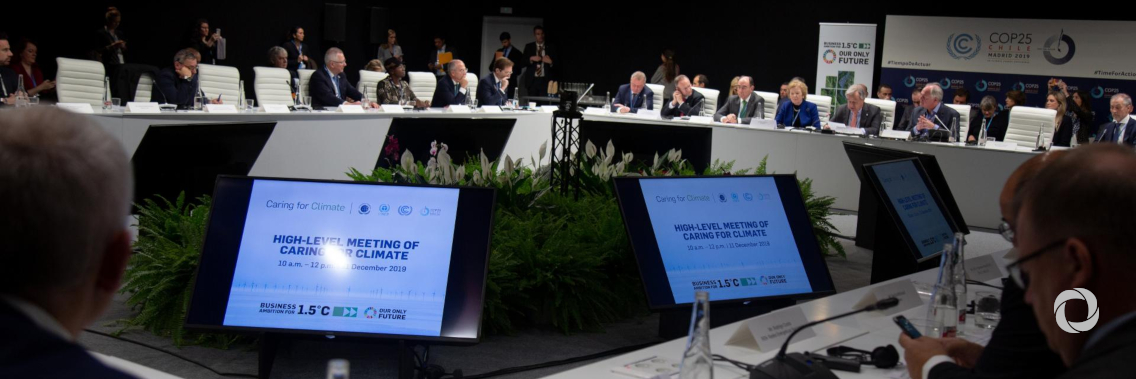
The announcement was made at the 25th annual United Nations Climate Change Conference (COP 25) and represents the major business contribution to the Climate Ambition Alliance: a growing multi-stakeholder group convened by the COP 25 Chilean Presidency that brings together countries, businesses, investors, cities and regions working towards achieving net-zero emissions by 2050.
With this announcement, these companies are leading the way in creating a positive feedback loop known as an “ambition loop” — with Government policies and private sector leadership reinforcing each other and together taking climate action to the next level.
Ambitious corporate action helps to send strong market signals and should give Governments confidence to urgently ramp up their national climate plans, including Nationally Determined Contributions (NDCs) and long-term strategies, in line with the latest climate science. By setting policies and targets in line with a 1.5°C trajectory, Governments give business the clarity and confidence to invest decisively in the zero-carbon economies of the future.
Original source: UNFCCC
Published on 11 December 2019