
Add us as your preferred source on Google to see more of our content in Search.
 Add to Preferred Sources
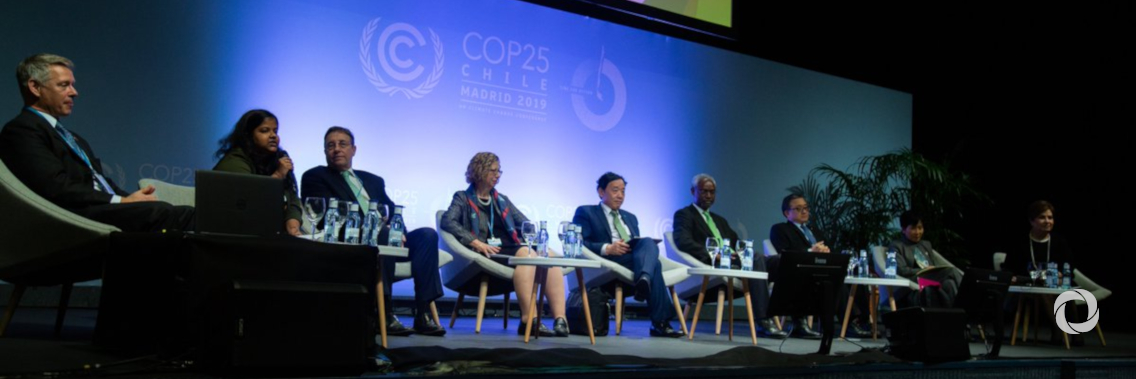
At COP25 in Madrid, Heads of UN agencies met for a high-level Leadership Dialogue on how to turn the tide on deforestation and committed to the common goal of helping countries reduce deforestation and improve forest management.
According to the UN, up to 23% of all greenhouse gas emissions derive from the Agriculture, Forestry and Other Land Use (AFOLU) sector.
However, a myriad of forest-based solutions taking place on the ground show the real and promising results that forests can deliver.
As President of COP25, Chile initiated the “Santiago Call for Action on Forests.” The call highlights the fact that climate change, including increases in frequency and intensity of extreme weather events, is impacting terrestrial ecosystems, exacerbating existing risks to livelihoods, food systems, infrastructure, human and ecosystem health, and biodiversity.
The COP25 Presidency issued a call for action on seven essential activities, including on reducing emissions from deforestation and forest degradation and enhancing so-called “sinks” which absorb carbon.
Together with improved land management options, forests and trees could provide up to 30% of greenhouse gas mitigation required by 2030 to keep the increase in global average temperature below 2 degrees Celsius, the upper-temperature goal of the Paris Agreement.
All UN agencies at today’s high-level Dialogue committed firmly to the common goal of helping countries to reduce deforestation and improve forest management.
Addressing deforestation is an issue that is a concern throughout the UN organization and for millions throughout the world. All UN agencies emphasized their readiness to support countries in their efforts to reduce deforestation and forest degradation, building on existing efforts to provide technical and financial support, and working together as partners. Trust-building through the UNFCCC transparency framework will remain vital for collaboration on this important matter.
Finally, it was also highlighted that reducing deforestation requires an effort by all stakeholders, engaging local communities and indigenous peoples, women and youth, civil society and the private sector, as well as producers and consumers.
Original source: UNFCCC
Published on 12 December 2019