
Add us as your preferred source on Google to see more of our content in Search.
 Add to Preferred Sources
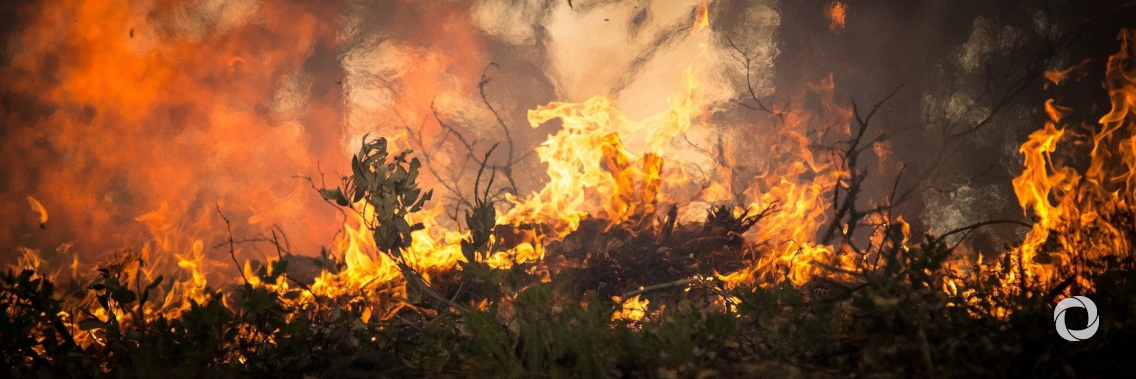
Extensive wildfire disasters, such as recently reported in Australia, Indonesia and the United States, adversely affect communities, economies and ecosystems. More generally, they contribute to air pollution and global warming and indicate that existing mechanisms to deal with wildfire, centered around disaster risk management, are insufficient.
Carbon dioxide (CO2) and other emissions from peatland and forest wildfires contribute substantially to the global greenhouse effect, thus making floods and droughts more likely to occur. They also produce health-damaging smoke particles and black carbon.
Smoke particles reduce solar radiation absorbed by the atmosphere during fires or burning seasons. This can generate significant regional climate effects.
Black carbon in smoke particles can lead to warming in the middle and lower atmosphere, leading to more unpredictable weather patterns. Deposits of black carbon on snow make the snow less able to reflect sunlight back into space, further warming the planet.
A paper presented by Johan Kieft, ecosystems and wildfires expert at the UN Environment Programme (UNEP), and Nico Oosthuizen, the market’s director of Working on Fire, a brand developed by Kishugu in South Africa, was jointly presented in Brazil in October 2019 at the International Wildland Fire Conference.
“Wildfires are expected to increase in many regions of the globe under a changing climate. Reducing forest-related greenhouse gas emissions is key to mitigating climate change,” says Kieft.
“The forestry sector offers significant potential for mitigation of greenhouse gas emissions,” he adds.
To capture that potential, the parties to the United Nations Framework Convention on Climate Change (UNFCCC), have developed the “Reducing Emissions from Deforestation and Forest Degradation (REDD+)” approach, providing incentives to reduce emissions from deforestation and degradation, sustainably manage forests, and conserve and enhance forest carbon stock.
Forests and peatlands are key nature-based solutions to climate change thanks to their unparalleled capacity to absorb and store carbon. Forests capture carbon dioxide at a rate equal to about one-third of the amount released annually by burning fossil fuels. Stopping deforestation and restoring damaged ecosystems could provide up to 30 percent of the global climate solution.
The UN-REDD Programme, a joint UN flagship partnership to mitigate climate change between the Food and Agriculture Organization of the United Nations, the United Nations Development Programme, and UNEP to assist countries on their REDD+ process, supports policies in Indonesia to reduce peatland and forest fire-related greenhouse gas emissions which account for 55 percent of the country’s total, says Kieft.
REDD+ also tries to ensure that responsibilities for fire management are distributed fairly, that rural livelihoods are protected, and that any new activities have positive outcomes for local people.
Original source: UN Environment
Published on 16 December 2019