
Low level of hunger but high prevalence of moderate food insecurity, overweight, and obesity in Europe and Central Asia
Add us as your preferred source on Google to see more of our content in Search.
 Add to Preferred Sources
Hunger in Europe and Central Asia is low, but a high number of people are affected by moderate food insecurity, such as limited food and access to nutritious food, as well as overweight and obesity, revealed a new FAO report.
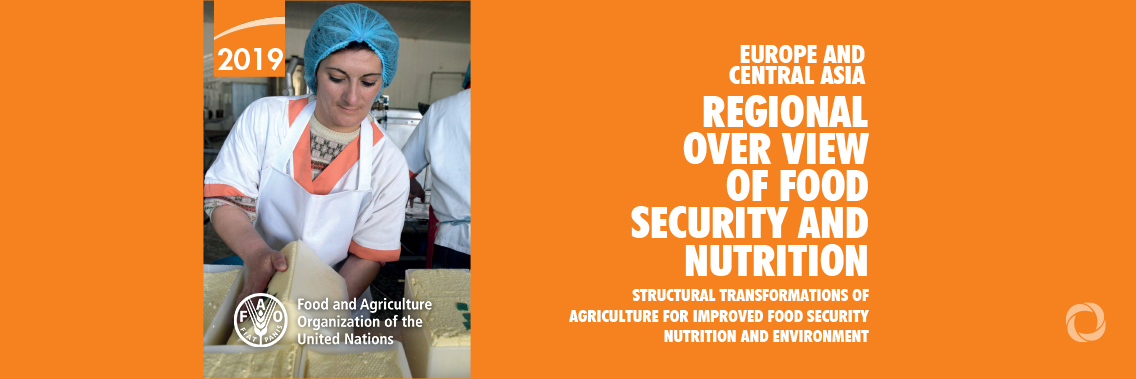
The Regional Overview of Food Security and Nutrition in Europe and Central Asia 2019, provides specific recommendations for policymakers for targeted interventions on nutrition, inequalities and rural development, and achieving the global goals of the 2030 Agenda for Sustainable Development.
In Europe and Central Asia, food security has improved substantially over the past two decades and the vast majority of the 50 or so countries monitored managed to keep the prevalence of undernourishment below 5 percent – less than half of the world average (10.8 percent).
New estimates for 2018 suggest that a severe level of food deprivation is no longer a concern (1.8 percent of the total population, compared with 9.2 percent globally). However, sizeable portions of the population have difficulty in regularly accessing nutritious and sufficient food. According to estimates, over 100 million people (11 percent of the population) in the region are exposed to moderate or severe food insecurity – an indicator, developed by FAO on the basis of the Food Insecurity Experience Scale, to track progress towards reaching Zero Hunger.
“A considerable number of adults and children still suffer from various forms of malnutrition, including stunting, wasting, overweight, obesity, anaemia; in fact, some of them co-exist in many countries,” said Cheng Fang, FAO economist. “Especially, overweight and obesity imply significant health concerns,” Fang added, referring to a report finding that adult obesity in almost all countries of the region has in 2016 outnumbered the world average of 13.2 percent, and in 13 countries it was twice as high as the world average. Adult obesity has been rising in all countries in the region.
Sex-disaggregated data show that women are more likely to experience moderate or severe food insecurity than men (10.7 percent to 9.8 percent) in Europe and Central Asia. On a positive note, the prevalence of low birth weight is below the global average of 14.6 percent; however, there is a recent increasing trend in most countries.
As the FAO report points out, socio-economic inequalities slow down or even hinder progress on the reduction of poverty, food insecurity, and malnutrition, risking the 2030 Agenda principle of leaving no one behind.
The report calls on countries to channel more public investments into agriculture and rural areas and improve the quality of spending, as the expenditures in these areas are low compared to the sector’s importance in the economy. This situation can hamper the realization of food security, nutrition, and environmental goals.
Read and download the report: Regional Overview of Food Security and Nutrition in Europe and Central Asia 2019.
Original source: FAO
Published on 17 December 2019